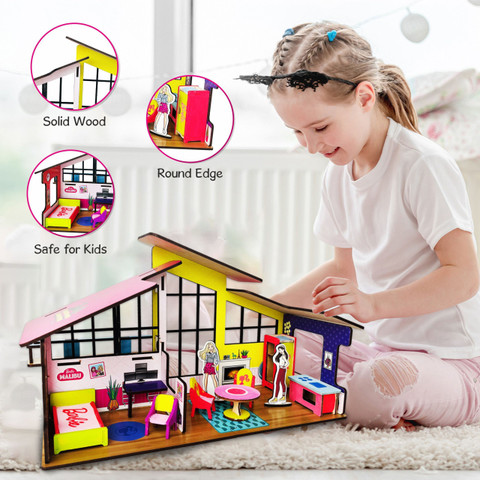
Doll House Color Ideas: Transform Your Miniature World With Stunning Palettes
Have you ever stared at a plain dollhouse interior and wondered, "What color scheme would truly bring this miniature world to life?" The answer lies in understanding that color is the soul of any dollhouse, setting the mood, telling a story, and creating a space that feels authentically lived-in. Whether you're crafting a cozy Victorian cottage, a sleek modern loft, or a whimsical fairy tale castle, the right doll house color ideas can elevate your project from a simple model to a captivating work of art. This guide will walk you through a comprehensive journey of color theory, practical application, and inspiring palettes to help you design the miniature home of your dreams.
Understanding the Foundation: Color Psychology for Miniatures
Before diving into specific palettes, it's crucial to grasp how color functions in a scaled-down environment. The principles of color psychology apply powerfully, but with unique considerations for small spaces.
How Light and Scale Affect Color Perception
In a dollhouse, walls are mere inches tall. A color that feels soft and soothing on a full-sized wall can appear overly bold or even garish in miniature. This is due to relative scale and lighting. The smaller the surface area, the more intense a pure hue can seem. Therefore, you'll often achieve better results by:
- Tinting (adding white) to create softer, more luminous versions of your chosen color.
- Toning (adding gray) to create sophisticated, muted shades that read as more natural in small spaces.
- Using off-whites and creams as a base instead of stark pure white, which can be jarring.
Consider the lighting scenario of your dollhouse. A room with tiny, non-functional windows will need lighter walls to avoid feeling like a cave. Conversely, a room designed with elaborate, bright miniature lighting can handle slightly deeper tones.
Creating a Cohesive Color Story Across Rooms
A common mistake is treating each room as an isolated color experiment. The most professional-looking dollhouses have a unified color narrative that flows from room to room. This doesn't mean every wall must be the same color. Instead, think in terms of a primary palette (2-3 colors) and an accent palette (1-2 colors). Use your primary palette for the majority of walls and large furniture pieces, and weave your accent colors through textiles, small furniture, artwork, and accessories in different rooms. This creates visual harmony and tells a story about the inhabitants' tastes.
Classic & Timeless: The All-White and Neutral Palette
There's a reason all-white interiors are perennially popular in both full-scale and miniature design: they create a sense of space, light, and elegance. For a dollhouse, this palette is incredibly versatile and serves as the perfect blank canvas.
The Nuances of White: It's Not Just One Color
"White" is a spectrum. Using a single, flat white will make your dollhouse look cheap and unfinished. Explore the family:
- Warm Whites: Have yellow, beige, or pink undertones (e.g., Chantilly Lace, Swiss Coffee). They feel cozy, traditional, and inviting. Perfect for farmhouse, cottage, or classic styles.
- Cool Whites: Have blue, gray, or violet undertones (e.g., Simply White, Decorator's White). They feel crisp, modern, and clean. Ideal for contemporary, coastal, or Scandinavian miniatures.
- Off-Whites & Creams: The safest and most forgiving choice for miniatures. Colors like "Linen White" or "Antique White" provide warmth without starkness and hide brush strokes better than pure white.
Adding Depth with Texture and Tone
An all-white palette risks being boring. Prevent this by introducing textural variation and subtle tonal shifts.
- Paint Techniques: Try a subtle color wash (thinned paint) or dry brush technique on walls to create a weathered, plaster-like effect.
- Material Mix: Combine painted walls with wood tones (a light oak floor, a pine bookshelf) and natural fibers (jute rug, linen curtains).
- Greige is Key: A warm gray-beige ("greige") is the ultimate neutral. Use it for a wall, a sofa, or a floor to anchor the space without introducing strong color. It bridges warm and cool elements seamlessly.
Warm & Welcoming: Cozy Earth Tones and Rustic Hues
If your dollhouse aesthetic is cottagecore, farmhouse, rustic, or Mediterranean, a warm, earthy palette is your best friend. These colors evoke nature, comfort, and history.
Building a Rustic Palette: Think Soil, Sky, and Harvest
- Walls:Sage green (a gray-green), dusty blue, warm terracotta, or oatmeal (a textured, beige-white). These colors feel aged and settled.
- Accents:Mustard yellow, burnt orange, deep olive green, and rust. Use these in small doses—a throw pillow, a kitchen towel, a potted plant.
- Wood Tones: Embrace unfinished or lightly stained wood. The goal is a lived-in, not a polished, look. Think pine, oak, and reclaimed-looking surfaces.
Practical Application: The Country Kitchen
Imagine a dollhouse kitchen. Paint the walls a soft buttermilk yellow or sage green. The cabinets could be a warm gray or off-white with dark antique-style hardware. A small terracotta pot holds a miniature herb. A linen Roman shade in a muted blue-and-white check adds pattern. The floor is a wide-plank, lightly stained pine. This combination feels authentic, warm, and instantly tells a story of a home where meals are cooked with love.
Cool & Calm: Serene Blues, Greens, and Grays
For a coastal, Scandinavian, modern, or tranquil bedroom vibe, cool and calm palettes are essential. They promote relaxation and a sense of airy spaciousness.
Mastering the Coastal or Scandinavian Look
- The Core:White walls (a cool white) are almost mandatory. The floor should be a light, washed wood (like birch or ash) or even painted a soft gray.
- The Color: Introduce one main color as an accent. Classic choices are:
- Navy Blue: For sophistication and contrast (anchor pillow, throw blanket, small side table).
- Seafoam Green or Aqua: For a fresh, playful coastal feel (vase, bedding, wall art).
- Soft Gray: For a monochromatic, ultra-minimalist Scandi look (furniture, textiles).
- The Texture: This style lives and dies by texture. Think sheepskin rugs, knit throws, raw linen, smooth stone (for a fireplace surround), and light-toned woods.
The Power of Monochromatic Schemes
Choose one color (e.g., a specific blue) and use tints, tones, and shades of it throughout a room. A wall in a pale blue tint, a sofa in a medium blue tone, and a small vase in a deep navy shade. This creates a sophisticated, layered, and harmonious look that is surprisingly easy to execute and always looks intentional.
Bold & Dramatic: Making a Statement with Deep Colors
Don't be afraid of color! A single wall or a small room painted in a deep, saturated hue can be the most stunning feature of your dollhouse, adding luxury, drama, and incredible depth.
Where and How to Use Dark Colors in Miniatures
- Perfect Locations: A dollhouse library (dark green or burgundy), a theater room (deep navy or plum), a primary bedroom (charcoal gray or aubergine), or a powder room (jewel-toned teal or emerald).
- The Golden Rule:Balance is everything. A dark room must have ample miniature lighting—wall sconces, a chandelier, table lamps. Without light, it will just look dirty.
- Contrast is Crucial: Pair the dark wall with light furniture (white sofa, cream bookshelf) and metallic accents (gold leaf mirror frame, brass lamp). This creates a high-end, dramatic contrast.
- Size Matters: In a very small room (like a half-bath), a dark color can actually make it feel more intimate and cozy, like a jewel box, provided it's well-lit.
Thematic Color Palettes: Matching Style to Story
Let's connect color directly to popular dollhouse architectural styles.
Victorian Gothic (Think: "Wednesday" or "The Addams Family")
- Palette:Deep burgundy, forest green, mustard yellow, black, and cream.
- Application: Dark wood floors, rich velvet textiles in jewel tones, gilded (gold-painted) picture frames and mirror accents, cream walls with dark wood wainscoting.
Mid-Century Modern
- Palette:Warm teak wood, mustard yellow, avocado green, tangerine orange, brown, and white.
- Application: Light wood floors (teak or walnut), a iconic Eames-style chair in a pop color, geometric rugs, clean-lined white furniture, and sunburst clocks.
Fairy Tale / Storybook
- Palette:Pastel pinks, blues, yellows, and greens, white, soft lavender.
- Application: Whimsical and unstructured. Colors can be brighter and less natural. Think a cottage with a pink stucco wall, a blue door, and a yellow window frame. Embrace asymmetry and playfulness.
Practical Execution: From Paint to Finish
Choosing colors is only half the battle. Application makes or breaks the final look.
Essential Tools and Techniques for Dollhouse Painting
- Paint Choice:Acrylic craft paint is the standard. It's water-based, easy to clean, and comes in every color. For furniture, consider chalk paint for a matte, distressed look with minimal prep.
- Brushes: Invest in a few good-quality synthetic sable brushes in various sizes (000, 00, 0, 1). A bad brush will leave streaks.
- The Secret Weapon: Gesso. Always prime your surfaces with gesso (a white, chalky primer) first. It seals the material (wood, cardboard, resin), provides a uniform surface, and makes your top color pop. Sand lightly between coats for an ultra-smooth finish.
- Thinning is Key: For large wall areas, thin your acrylic paint with a little bit of water (or acrylic medium) to improve flow and reduce brush strokes. Multiple thin coats are always better than one thick, gloppy coat.
- Protect Your Work: Once paint is fully cured (24-48 hours), seal it with a matte or satin varnish (water-based polyurethane). This protects against scratches and dust and can slightly unify the sheen.
Painting Floors, Walls, and Furniture: A Strategy
- Walls: Paint in thin, horizontal strokes. Use a small brush for edges and a slightly larger flat brush for the main area. Consider painting the interior wall before installing it to avoid messy edges.
- Floors: For wood grain, use a base coat of brown, then while wet, drag a lighter or darker shade with a fine brush to create lines. For tile or stone, use painter's tape to create crisp grids and paint each "tile" a slightly different shade for realism.
- Furniture: Sand any rough edges first. Prime. Paint. For a distressed look, paint your base color, then lightly sand edges and raised details to reveal the primer or wood underneath. Finish with a dark wax rubbed into the recesses for instant age.
Frequently Asked Questions (FAQs) About Doll House Color Ideas
Q: How do I choose a color for a very small dollhouse room?
A: Stick to light, cool tints (pale blue, soft green, light gray) and use a consistent color on walls and ceiling to erase visual boundaries. Avoid dark colors unless you plan to use intense, focused lighting to counteract the cave effect.
Q: Can I use regular wall paint from the hardware store?
A: Technically yes, but it's not ideal. It's thick, difficult to control in tiny amounts, and has a strong odor. Acrylic craft paint is formulated for small-scale work, is less messy, and offers better control.
Q: My dollhouse is a kit with plain white walls. What's the easiest first project?
A: Start with a single feature wall in one room. Choose a soft tint of your favorite color. It's a low-commitment way to see how color transforms the space and build confidence. Then add color through rugs, curtains, and miniature art—these are removable and easy to swap.
Q: How do I make colors look "aged" or "vintage"?
A: The magic is in toning down and layering. Don't use pure, bright colors. Choose muted, grayed-out versions. After painting, use a very thin wash of brown or gray acrylic paint (heavily thinned with water) and brush it over the surface, then immediately wipe most of it off with a cloth. This settles into crevices and creates a uniform patina.
Q: What's the biggest color mistake to avoid in a dollhouse?
A:Using too many unrelated, bright colors. A dollhouse with a red wall, a blue floor, a yellow chair, and a green ceiling will look chaotic, not charming. Limit your main colors to 2-3 per room and ensure they are connected (analogous on the color wheel) or have a clear dominant/subordinate relationship.
Bringing It All Together: Your Action Plan
- Define the Story: Who lives in your dollhouse? A young family? A retired artist? A bachelor? Their personality dictates the palette.
- Gather Swatches: Use paint chip samples from the hardware store or print online color palettes. Hold them up to your dollhouse in different lighting. See how they interact with your existing wood tones and planned fabrics.
- Test Before You Commit: Paint a small, inconspicuous area (like the back of a wall section or inside a closet). Look at it over a day in different light. This prevents costly mistakes.
- Start Small: Begin with textiles and accessories. A rug, a set of curtains, a few throw pillows in your chosen colors can be purchased or made easily. This lets you live with the palette before committing to painting major surfaces.
- Embrace Imperfection: Hand-painted miniature walls will have brush strokes. That's part of their charm! Don't strive for a factory-perfect finish. Aim for a lived-in, authentic feel.
Conclusion: Your Miniature Masterpiece Awaits
The world of doll house color ideas is as boundless as your imagination. By understanding the core principles of color psychology, scale, and cohesion, you can move beyond guesswork to create miniature interiors that are not only visually stunning but also emotionally resonant. Remember, the most successful dollhouse color schemes tell a story—they suggest the lives lived within those tiny walls. Whether you opt for the serene elegance of all-white, the warm embrace of earth tones, the bold statement of a jewel-toned library, or the playful charm of a storybook palette, your choice of color is the first and most powerful brushstroke in your creative journey. So pick up that brush, mix your paint, and with these doll house color ideas as your guide, transform your miniature rooms into captivating, personalized worlds. The only limit is the story you wish to tell.