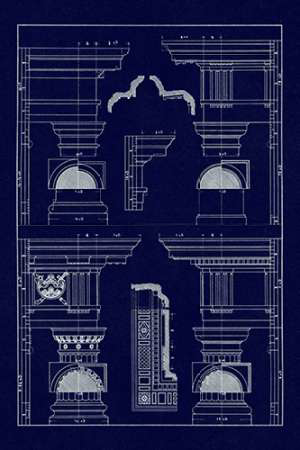
Dream House Plan Drawing With Doric Columns: Your Blueprint To Timeless Elegance
Have you ever flipped through a home design magazine or scrolled through architectural Pinterest boards and felt a sudden, profound pull toward a home that whispers of ancient temples and enduring strength? A home where the very structure seems to speak of wisdom, stability, and refined taste? That magnetic feeling often points to one unmistakable feature: the commanding presence of Doric columns. But how do you move from that fleeting vision to a tangible, buildable dream house plan drawing with Doric columns? It’s a journey that blends historical reverence with modern practicality, artistic vision with precise engineering. This guide will walk you through every step, transforming that inspired idea into a detailed blueprint you can proudly present to your architect or builder.
The Enduring Legacy: Why Doric Columns Define Grandeur
Before we dive into the technicalities of drawing, we must understand why this specific order of column is the cornerstone of so many iconic dream house plans. The Doric order is the oldest and simplest of the classical Greek architectural styles, characterized by its sturdy, fluted shaft and plain, powerful capital. It embodies masculine strength, simplicity, and structural honesty. Unlike the more ornate Ionic or Composite orders, Doric columns speak a language of unadorned power. Their use in a residential plan immediately elevates a home from a mere dwelling to a statement of permanent value and classic aesthetics.
A Journey Through Time: From the Parthenon to Your Porch
The story of the Doric column begins in the 7th century BC on the Greek mainland. Its most famous manifestation is the Parthenon in Athens, a temple that has stood for nearly 2,500 years. The Romans adopted and slightly modified the order, using it in temples, basilicas, and public buildings. This style experienced a massive resurgence during the Neoclassical and Greek Revival periods in America (late 18th to mid-19th centuries). Think of the plantations of the American South, like Mount Vernon, or the grand public buildings of Washington D.C., such as the Capitol. These structures cemented the Doric column as a symbol of democratic ideals, civic virtue, and enduring prosperity. Incorporating this element into your modern dream house plan drawing connects your home to this millennia-old lineage of monumental architecture.
Decoding the Doric: Key Proportions and Features
To draw them correctly, you must know their anatomy. A true Doric column has specific, mathematically derived proportions that create its perfect, harmonious look. The height of a Doric column is typically 4 to 6 times its diameter at the base (the entasis—a subtle swelling in the middle of the shaft that corrects optical illusion of concavity). The capital (top) is a simple, cushion-like echinus supporting a square abacus. The column sits on a stylobate (stepped base) and is often paired with a triglyph and metope frieze running above it. Understanding these ratios is non-negotiable for an authentic dream house plan drawing with doric columns. A column that is too thin looks spindly; one that’s too thick looks clumsy. Precision here is what separates a kitschy imitation from a timeless design.
From Vision to Blueprint: The Practical Process of Drawing Your Plan
Now, let’s get our hands dirty—or rather, our pencils (or styluses) on the digital drawing tablet. Creating a viable house plan is a systematic process.
Step 1: Define the Function and Scale
First, ask: What is the primary role of these columns? Are they supporting a massive portico (a roofed porch)? Are they engaged (attached) to the wall as decorative pilasters? Are they framing a grand entrance or supporting a balcony? Their function dictates their size, spacing, and detail. A load-bearing portico requires robust, closely-spaced columns, while decorative pilasters can be shallower and more widely spaced. Next, establish your home’s overall scale. A 3,000 sq ft home will need columns with a different diameter (often 12” to 16” at the base) than a 6,000 sq ft estate (which might use 18” to 24” columns). Always draw to scale—1/4” = 1’0” is standard for residential plans.
Step 2: Master the Elevation Drawing
The elevation drawing is your primary tool. This is a flat, non-3D view of each side of the house. Here, you will precisely render your Doric columns. Start by drawing the ground line and establishing the height of the story (typically 9-10 feet for main floors). Using your chosen column proportion (e.g., 1:5.5 height-to-diameter), calculate the full column height. Don’t forget the capital and base in this measurement. Draw the flutes—typically 20 shallow, vertical grooves for a true Doric column—with a consistent width and spacing. Then, design the entablature (the beam system above): the architrave (nearest the columns), the frieze with its triglyphs (three vertical bars) and metopes (square panels), and the cornice (crowning projection). Every line must be straight, every curve perfectly elliptical.
Step 3: Integrate into the Floor Plan
The floor plan is the horizontal slice, showing walls, doors, and room layouts from above. Your columns will appear as solid rectangles at their exact locations. This is crucial for structural engineers and framers. You must indicate the column’s centerline and its exact dimensions. If the columns are supporting a beam, you must show that beam as a thick line connecting the column tops in the plan. The space between columns (the bay) will define your porch or room width. Standard spacing for Doric columns is often 1.5 to 2.5 times the column diameter to maintain the sturdy, dense look of the order. A common mistake is spacing them too far apart, which breaks the visual rhythm and can look structurally weak.
Step 4: Detail, Detail, Detail
A complete dream house plan drawing includes detail sections. Create a large-scale detail drawing of one column capital, showing how the flutes terminate, the exact curve of the echinus, and the junction with the abacus. Detail how the column meets the stylobate or the wall if it’s a pilaster. Show the triglyph pattern above—how it aligns with the column centers. These details are what your builder will use to create the moldings. Specify materials: will the columns be solid stone, cast stone, high-density polyurethane foam (for a lightweight, realistic look), or painted wood? Each material has different attachment and load-bearing requirements that must be noted on your drawings.
Material Matters: Choosing the Right Substance for Your Columns
The material you specify dramatically affects the look, cost, and structural reality of your Doric columns in the final house plan.
- Natural Stone (Marble, Limestone, Granite): The pinnacle of authenticity and durability. It’s heavy, expensive, and requires skilled stone masons, but it’s permanent and ages beautifully. Ideal for high-end, traditional builds.
- Cast Stone or Precast Concrete: The most common modern choice. It can be molded to exact classical profiles, is relatively affordable, strong, and can be colored to match stone. Excellent for load-bearing applications.
- Fiberglass or High-Density Polyurethane: Lightweight, easy to install (often as a skin over a wooden post), and very cost-effective. Great for decorative applications where the column is not structural. Quality varies; high-end versions are remarkably realistic.
- Wood (Sawn or Turned): Traditional in early American Greek Revival homes. Requires expert turning on a lathe and is susceptible to rot and insects, needing meticulous maintenance. Often used for interior or covered porches.
- Brick or Stone Veneer over a Structural Core: A practical hybrid. A steel or wooden post provides the strength, while a skilled mason applies a veneer of brick or thin stone, shaping it into the Doric form. This allows for very large columns.
Your dream house plan drawing must clearly call out the material and any required structural support (e.g., "Column to be cast stone, hollow core, reinforced with #4 rebar, grouted solid, bearing on 12" thick concrete footing").
Common Pitfalls and How to Avoid Them in Your Design
Even the most inspired dream house plan drawing with doric columns can hit snags. Here’s how to sidestep them:
- Incorrect Proportions: The #1 error. Using a column that is too slender or with the wrong flute count destroys the Doric essence. Always reference a classical order guide (like those by Vitruvius or Vignola) and stick to the 1:5.5 to 1:6.5 height-to-diameter ratio at the base.
- Ignoring Entasis: Flattening the column shaft. The subtle midpoint bulge is critical for the column to appear straight to the human eye from a distance. Your drawing software should have a tool for this, or you must draw it by hand with a slight, graceful curve.
- Poor Integration with Roof Lines: The entablature (especially the cornice) must project correctly and integrate seamlessly with the roofline above. A cornice that looks like an afterthought or is too shallow will look cartoonish. Study historical examples.
- Overpowering the House: Massive Doric columns on a modest, simple home create a disproportionate, "temple on a cottage" effect. The column size and grandeur must be commensurate with the overall size and style of the house. A cottage might use simple, square Doric pilasters instead of full round columns.
- Forgetting the Details: Omitting the triglyphs or using the wrong frieze pattern (Doric should be triglyph/metope, not a continuous band). The capital must be a simple, rounded echinus—never carved with acanthus leaves (that’s Corinthian).
Bringing It All Together: A Cohesive Design Narrative
Your dream house plan isn’t a collection of parts; it’s a story. The Doric columns are a principal character in that story. They should inform other design choices. If you have a grand Doric portico, consider a symmetrical facade with balanced window placements to match the columns' rhythm. Use simple, rectangular window shapes with minimal trim to complement the columns’ strength. Consider a hip or gable roof with a wide, overhanging cornice that echoes the classical entablature. The material palette—whether it’s white clapboard with black shutters (a classic Greek Revival pairing) or warm limestone with a standing seam metal roof—should feel cohesive. Every element from the front door (perhaps with a rectangular transom and sidelights) to the landscape (symmetrical boxwoods, a central pathway) should feel like it belongs in the same classical world your columns have introduced.
The Professional Touch: When and Why to Hire an Architect
While this guide empowers you to understand and sketch the concept, executing a buildable, code-compliant, and structurally sound dream house plan drawing with doric columns is a task for a licensed architect or residential designer. Why?
- Structural Engineering: They will calculate the exact load the columns and their supporting beams must carry, specifying footings, post sizes, and connections that meet local building codes.
- Building Codes & Zoning: They navigate setbacks, height restrictions, and egress requirements that your sketch might inadvertently violate.
- Construction Documents: They produce the full set of drawings—foundation plans, framing plans, electrical layouts, etc.—that your builder needs. Your beautiful elevation is just one piece.
- Material Specification: They write precise specifications for materials and finishes, avoiding ambiguity that leads to change orders and cost overruns.
- Value: For a project of this classical complexity, an architect’s fee (typically 8-15% of construction cost) is an investment that prevents costly mistakes and ensures the final home is exactly the timeless masterpiece you envisioned.
Your role is to be the informed client and visionary. Come to your architect with your researched sketches, your preferred column proportions, material ideas, and inspirational photos. This collaborative approach yields the best results.
Conclusion: Building More Than a House
A dream house plan drawing with Doric columns is more than an architectural exercise; it’s a declaration. It declares that you value history, craftsmanship, and a sense of permanence in a world of fleeting trends. It’s a commitment to a home that feels as substantial and reassuring in 100 years as it does today. By understanding the history, mastering the proportions, thoughtfully selecting materials, and avoiding common design traps, you transform a romantic notion into a concrete blueprint. The journey from that first spark of inspiration—“I want a house with those strong, beautiful columns”—to a full set of construction drawings is a rewarding one. It bridges the gap between the timeless ideals of ancient Greece and the modern dream of a personal sanctuary. Now, armed with this knowledge, you can confidently take the first step: start sketching, study the classical orders, and begin to build your legacy, one perfectly proportioned Doric column at a time.