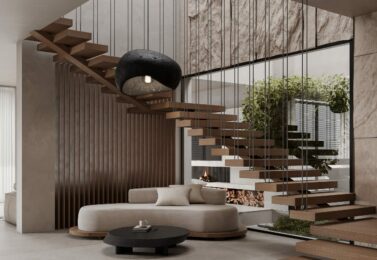
Modern House Design Meaning: More Than Just A Style, It's A Philosophy
What does modern house design truly mean? Is it simply a sleek, minimalist aesthetic seen in glossy magazines, or is there a deeper, more intentional philosophy driving the homes of today? When we ask about the "modern house design meaning," we're not just inquiring about floor plans or paint colors. We're probing a fundamental shift in how we live—a movement that champions purpose over pretense, connection over isolation, and sustainability as a core value. True modern design is a conscious rejection of ornament for ornament's sake, embracing instead an ethos of "form follows function" with a 21st-century conscience. It’s about creating spaces that are not only beautiful in their simplicity but are also healthy, efficient, and deeply responsive to the way we live now. This article will unpack the layers of this meaning, moving beyond the surface-level look to explore the principles, materials, and lifestyle that define authentic modern house design.
The Core Philosophy: Understanding the "Why" Behind Modern Design
At its heart, the meaning of modern house design is rooted in a revolutionary idea that emerged in the early 20th century: that a building's design should be based purely on its function and the materials of its time. Pioneers like Ludwig Mies van der Rohe, with his famous dictum "less is more," and Frank Lloyd Wright, who championed organic architecture, set the stage. This philosophy rejected the heavy, historically derivative styles of the Victorian and Edwardian eras. It was a bold declaration for clarity, honesty, and a new way of living that aligned with the modern, industrialized world.
Form Follows Function: The Non-Negotiable Principle
The mantra "form follows function" is the bedrock of modern design. This means the shape and appearance of a house should be a direct result of its intended purpose and the needs of its inhabitants. There is no room for unnecessary columns, decorative trims, or complex rooflines that serve no structural or spatial purpose. A modern home’s form is an honest expression of its interior layout and its relationship to the site. For example, a long, horizontal line might emphasize a stunning view, while a flat roof (or a very low-slope roof) is not just an aesthetic choice but a practical one for housing mechanical equipment or creating a usable rooftop deck. The meaning here is purity of intent: every design decision must have a justifiable reason.
Honesty of Materials: Celebrating What You See
Closely linked to function is the principle of honesty of materials. Modern design refuses to disguise structural elements or fake materials. If it's steel, it should look like steel. If it's concrete, its texture and color should be celebrated, not covered with a faux finish. Wood should show its grain. This creates a sense of authenticity and tactile richness. Exposed beams, concrete floors, and visible ductwork (when done artfully) are not signs of an unfinished space but badges of integrity. This principle connects the home to its own construction story, creating a unique, unpretentious character that mass-produced, "cookie-cutter" homes lack.
"Less is More" and "Avoid the Decorative"
Mies van der Rohe's "less is more" is often misinterpreted as "sparse" or "cold." In its true meaning, it advocates for a curated environment where every single object, from the architecture down to the coffee mug, is essential and of high quality. It’s about removing the visual noise of clutter and excess to allow the quality of space, light, and material to shine. This extends to the interior: instead of a mantelpiece crowded with knick-knacks, a modern home might feature a single, stunning piece of art or a breathtaking view as its focal point. The decorative is avoided not because it's ugly, but because it often serves no functional purpose and distracts from the experience of the space itself.
Key Characteristics That Define the Modern Aesthetic
With the philosophy established, the physical manifestation of modern house design becomes clear. These are the visual and spatial characteristics you'll consistently find, all serving the core principles.
Clean Lines and Geometric Forms
Forget complex gables and ornate gingerbread. Modern architecture is dominated by straight lines, right angles, and simple geometric shapes—rectangles, cubes, and planes. Rooflines are flat or have a very minimal pitch. Windows are often large, rectangular panels arranged in a grid or in long, horizontal bands. This creates a sense of order, calm, and visual stability. The geometry is not arbitrary; it’s a direct response to the interior program and the site's constraints. A series of stacked boxes might house different family functions, while a long, low bar of a house hugs the landscape.
Abundant, Purposeful Glazing and Indoor-Outdoor Flow
One of the most transformative aspects of modern design is the mastery of natural light and the blurring of indoor-outdoor boundaries. Walls of glass, from floor to ceiling, are a signature feature. This isn't just for a pretty view; it floods interiors with daylight, reducing the need for artificial lighting and creating a direct, year-round connection to nature. This principle leads to design elements like sliding glass walls that can disappear entirely, expansive patios and decks that act as outdoor rooms, and courtyards that bring light and ventilation into the home's core. The meaning is a holistic living experience where the boundary between shelter and environment is fluid.
Open-Plan Living: Flexible and Connected Spaces
The traditional home was a series of small, boxed-off rooms. Modern design almost universally embraces the open-plan layout, particularly for the main living areas (kitchen, dining, living). This creates a sense of spaciousness, facilitates family interaction, and allows for flexible use of space. Walls become movable partitions or are eliminated entirely, with functions defined by furniture arrangements, changes in ceiling height, or flooring materials. A kitchen is no longer a hidden workspace but a central hub, often with an island that acts as a casual dining and socializing spot. This reflects contemporary family life, which is more casual and interconnected.
Materials and Palette: The Tactile Language of Modern Homes
The material selection is where the philosophy becomes tangible. The modern palette is neutral, natural, and industrial.
- Concrete: Perhaps the most iconic modern material. When used for floors, walls, or even ceilings (as polished concrete slabs), it provides thermal mass, durability, and an industrial chic aesthetic. Its raw, textured surface embodies honesty.
- Steel: Used for structural frames, window mullions, and staircases, steel allows for those long, unsupported spans of glass and creates sleek, slender lines. It’s strong, recyclable, and has a cool, precise feel.
- Glass: The transparent envelope, as discussed. Modern glass is highly energy-efficient, with double or triple glazing and low-E coatings, proving that sustainability and aesthetics go hand-in-hand.
- Wood: Used as a warm counterpoint to the coolness of concrete and steel. Modern design favors natural, minimally finished wood—think wide-plank oak floors, cedar cladding, or walnut cabinetry. The grain and color are part of the design.
- Neutral Palette: The backdrop is typically whites, grays, beiges, and charcoals. This neutrality isn't boring; it’s a canvas that allows the architecture, the views, and the occupants' personal belongings to become the color and life of the space. Accent colors are used sparingly and deliberately, often in artwork, a single piece of furniture, or textiles.
Modern Interior Design: Minimalism with Warmth
The interior of a modern home is an extension of its architecture. It’s a common misconception that modern means cold and sparse. The true meaning is curated, comfortable, and clutter-free.
- Furniture as Sculpture: Pieces are often low-profile, with clean lines and a focus on craftsmanship. Think of iconic designs by Eames, Noguchi, or Jacobsen. Furniture is treated as three-dimensional art in the space.
- Strategic Lighting: Lighting is architectural. Recessed downlights, linear LED strips, and sculptural pendant fixtures are used to highlight art, create ambiance, and define zones without intrusive fixtures. Natural light is the primary "lighting design."
- Texture is Key: To prevent a neutral palette from feeling sterile, texture is paramount. A nubby wool throw, a smooth leather sofa, a rough-hewn stone wall, a soft sheepskin rug—these tactile elements add depth, warmth, and sensory comfort.
- Integrated Storage: Clutter is the enemy of modern design. Therefore, storage is seamlessly integrated into the architecture—hidden cabinets, built-in shelving, and clever closet systems keep possessions out of sight, maintaining the serene, uncluttered aesthetic.
Sustainability: The Non-Negotiable Modern Imperative
Today, the meaning of modern house design is inextricably linked to environmental responsibility. This isn't an add-on; it's a fundamental design driver.
- Passive Design: The orientation of the house, placement of windows for cross-ventilation, strategic overhangs for solar shading, and thermal mass materials like concrete are used to naturally regulate temperature, drastically reducing energy loads.
- High-Performance Envelope: Super-insulated walls, roofs, and those high-performance windows are standard. Airtight construction prevents energy loss.
- Renewable Materials: Use of sustainably harvested wood, recycled steel, and low-VOC (volatile organic compound) finishes ensures healthy indoor air quality and reduces environmental impact.
- On-Site Systems: Modern homes increasingly incorporate solar panels, rainwater harvesting, and greywater recycling systems, moving toward net-zero energy and water independence. According to the U.S. Green Building Council, homes certified under LEED use 25-30% less energy on average, a statistic that aligns perfectly with the modern ethos of efficient, responsible living.
Modern vs. Contemporary: Clarifying a Common Confusion
A frequent question is the difference between "modern" and "contemporary." Modern design refers to a specific, time-bound movement from the early to mid-20th century (roughly 1920s-1960s) with the fixed principles we've discussed. Contemporary design means "of the current moment." It’s fluid and ever-changing, borrowing from many styles, including modernism. A contemporary home in 2024 might have a modern, clean-lined base but incorporate warmer materials, more eclectic furniture, or curved forms that a strict modernist would reject. The "meaning" of modern is its historical, philosophical purity; contemporary is today's stylistic expression.
Actionable Tips: How to Incorporate Modern Design Meaningfully
If you're inspired to bring this philosophy into your own space, start with intention:
- Edit Ruthlessly: Begin by decluttering. Modern space requires a absence of non-essentials. Apply the "one in, one out" rule.
- Focus on Architecture: If building or renovating, prioritize structural changes that create open plans and large windows. This is more impactful than any decor.
- Invest in Fewer, Better Things: Instead of buying many inexpensive items, save for one exceptional sofa, a beautiful wooden table, or a significant piece of art. Quality over quantity is key.
- Embrace Natural Materials: Introduce texture with a jute rug, linen curtains, a stone side table, or a live-edge wood shelf.
- Make Light a Priority: Maximize natural light with sheer window treatments. Invest in a layered artificial lighting plan with dimmers.
- Connect to the Outdoors: Even in a small space, create a visual connection. Use similar flooring materials inside and out, or add large potted plants to blur the edges.
Conclusion: Modern Design as a Pathway to Intentional Living
So, what is the true modern house design meaning? It is a holistic philosophy that champions purposeful living through honest architecture, mindful materiality, and a profound connection to the environment. It is not a rigid style template but a set of enduring principles: clarity, simplicity, authenticity, and responsibility. A modern home is a sanctuary from visual chaos, a promoter of well-being through light and air, and a testament to the belief that our spaces should support, not complicate, our lives. In a world of constant noise and consumption, the modern home offers a quiet, grounded alternative—a physical manifestation of the "less is more" mindset. It’s a design choice that says you value experience over accumulation, legacy over trend, and a sustainable future as much as a beautiful present. Ultimately, the meaning of modern house design is found not in its appearance, but in the quality of life it fosters within its walls.