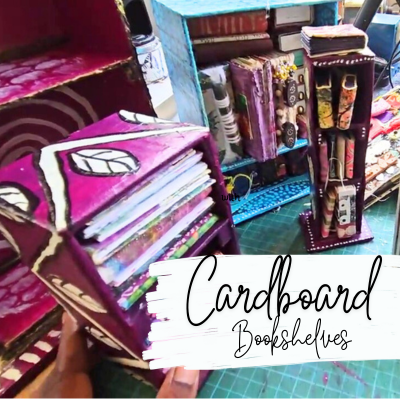
Cardboard Design Ideas: Transform Simple Boxes Into Stunning Creations
Have you ever looked at a stack of cardboard boxes and wondered, "What could I actually do with this?" That discarded shipping container, that leftover appliance box, isn't just trash—it's a blank canvas, a structural puzzle, and a sustainable resource waiting to be reimagined. The world of cardboard design ideas is a vast, thrilling frontier where creativity meets practicality, and where a simple corrugated sheet can become everything from a child's fort to a high-end retail display. This isn't about rough-and-tumble crafting; it's about understanding a remarkable material's potential and unlocking it with skill, vision, and a few smart techniques. Whether you're a complete beginner with a single box or an experienced maker planning a large-scale installation, this guide will dive deep into the transformative power of cardboard, offering comprehensive ideas, practical methods, and inspiring perspectives that will change how you see this ubiquitous material forever.
The Unparalleled Versatility of Cardboard as a Design Medium
At its core, the explosion of interest in cardboard design ideas stems from one fundamental truth: cardboard is incredibly versatile. It’s not a single material but a family of materials, from the single-wall corrugated used in shipping to heavy-duty double and triple-wall varieties, and the dense, smooth paperboard used for packaging. Each type offers different strengths, weights, and surface qualities, making cardboard suitable for an astonishing range of applications. Its inherent structure—the fluted medium sandwiched between liners—provides surprising strength-to-weight ratio, natural insulation, and a degree of flexibility that rigid materials like wood or plastic simply cannot match.
This versatility translates directly into cardboard design ideas for the home. Imagine a sleek, modern room divider crafted from precisely cut and interlocking geometric patterns, allowing light to filter through while creating privacy. Picture a custom-sized storage system for a awkward closet corner, built entirely from sturdy single-wall cardboard and painted to match your décor. Even temporary solutions, like a cardboard cat house with multiple levels and lookout windows, can be both functional and stylish. The material's ease of cutting, folding, and joining with simple tools like a craft knife, hot glue gun, or even specialized cardboard screws means that almost anyone can execute complex designs with a little patience and a good plan.
Furthermore, cardboard's surface is a designer's dream. It can be left raw for an industrial, rustic look, painted with any medium from acrylics to spray paint, covered with fabric or contact paper, or even veneered with thin wood laminates for a high-end finish. This adaptability means cardboard design ideas aren't confined to a "cardboard aesthetic"; they can seamlessly blend into any style, from minimalist and Scandinavian to bohemian and industrial. The key is to treat it not as a cheap substitute, but as a primary material with its own unique properties and possibilities.
Accessibility and Affordability: Democratizing Design
One of the most powerful drivers behind the popularity of cardboard design ideas is the material's universal accessibility and negligible cost. Unlike wood, metal, or plastics that require specialized suppliers and significant investment, cardboard is everywhere. It’s in your recycling bin, at local stores happy to give away boxes, and available in large sheets from packaging supply companies for a few dollars. This low barrier to entry democratizes design and making, allowing students, hobbyists, families on a budget, and community groups to create substantial, beautiful objects without financial constraint.
This affordability encourages experimentation. Failed prototypes cost pennies to make, not hundreds of dollars. Want to test the structural integrity of a new chair design? Build a full-scale mock-up from cardboard first. Need a temporary exhibit backdrop for a school play? Create a stunning, painted cityscape from stacked and shaped panels. The freedom to iterate and play without fear of wasting money is invaluable for learning and innovation. For educators, this makes cardboard an unparalleled tool for teaching principles of engineering, architecture, and design thinking. A cardboard chair project can teach load distribution, triangulation for strength, and ergonomics, all for the cost of a few boxes.
The economic advantage extends to professional contexts as well. Startups and small businesses can create stunning, custom retail displays, point-of-sale counters, and even modular furniture for pop-up shops at a fraction of the cost of traditional materials. This allows for rapid prototyping and brand-unique environments that would be prohibitively expensive otherwise. The accessibility of cardboard design ideas means that good design is no longer reserved for those with deep pockets; it's a skill set available to anyone willing to learn and create.
Nurturing Creativity: Cardboard Projects for Kids and Education
The realm of cardboard design ideas finds perhaps its purest expression in children's crafts and educational projects. Cardboard is the ultimate safe, non-toxic, and malleable medium for young minds. Its softness allows for cutting with safety scissors (with supervision), its rigidity holds shapes, and its blandness invites total creative freedom. Building a cardboard spaceship, a cardboard kitchen, or a cardboard castle isn't just play—it's a holistic developmental exercise. Children practice fine motor skills while cutting and folding, engage spatial reasoning and basic engineering when constructing stable structures, and unleash narrative imagination as they bring their creations to life.
Educators have long recognized this potential. Cardboard design ideas in STEM/STEAM education are booming. A simple challenge like "build a bridge between two chairs that can hold a book" introduces concepts of load, tension, and compression. Creating a cardboard marble run teaches gravity, momentum, and trajectory. Designing and building a cardboard automaton—a moving figure powered by cams and levers—combines art, mechanics, and storytelling. These projects are inherently cross-curricular, touching on math (measuring, geometry), science (physics of structures), art (design, painting), and language arts (documenting the process, writing a story about the creation).
For parents and caregivers, cardboard offers a fantastic antidote to screen time. A large appliance box can provide days, even weeks, of immersive play. The process of transforming a plain box into something specific—a train, a robot, a shop—builds problem-solving skills and perseverance. Moreover, these shared cardboard design ideas create powerful family bonding experiences. The collaborative effort of designing, cutting, and decorating a giant cardboard maze or a cardboard puppet theater creates memories that far outlast the toy itself. It’s a reminder that the best toys are often the ones we make ourselves, fueled by imagination and a simple, humble material.
From Pop-Up Shops to Luxury Retail: Professional Cardboard Applications
Moving beyond the home and classroom, sophisticated cardboard design ideas are making a significant impact in commercial and professional design. The material's strength, light weight, and ease of flat-packing make it a logistical dream for temporary and event-based architecture. The most visible application is in retail and exhibition design. High-end brands now use intricately laser-cut cardboard to create stunning, sculptural displays that look nothing like their humble origins. These can be formed into organic shapes, complex geometric lattices, or even realistic facades, all printed with vibrant graphics.
The pop-up shop phenomenon is largely built on cardboard. Its ability to be manufactured off-site, shipped flat, and assembled quickly into a fully realized, branded space is unmatched. Designers create entire rooms, counters, shelving units, and seating from engineered cardboard panels that slot and lock together without nails or screws. This allows for incredibly creative, low-cost, and low-waste temporary retail experiences. Similarly, in trade shows and exhibitions, cardboard is used for everything from booth walls and signage to custom product podiums and interactive kiosks. Its surface is perfect for direct-print graphics or wrapping, ensuring brand consistency.
Even permanent installations are exploring cardboard's potential. Some forward-thinking architects and interior designers are using heavy-duty, fire-retardant, and moisture-resistant cardboard panels for non-structural interior walls, acoustic diffusers, and decorative screens in offices, restaurants, and hotels. The material's natural texture and warmth can soften modern, industrial spaces. These professional cardboard design ideas challenge our perceptions of "temporary" and "cheap," proving that with intelligent design and engineering, cardboard can achieve a level of sophistication and elegance that competes with traditional materials, all while offering unparalleled sustainability benefits.
Engineering with Cardboard: Structural and Functional Design
The true magic of advanced cardboard design ideas lies in understanding and applying basic engineering principles to this seemingly fragile material. Cardboard's strength comes from its geometry—the fluted core acts like an I-beam, resisting bending. By orienting the flutes correctly (vertically for stacking strength, horizontally for bending resistance) and using techniques like lamination (gluing multiple layers together with grains running perpendicular), its strength can be multiplied exponentially. This is the foundation of cardboard furniture design.
Iconic cardboard chair designs, like those from the "Cardboard Chair" project or the work of designers like Frank Gehry (who famously used it for the "Easy Edges" series in the 1970s), are not just conceptual; they are fully functional. They utilize folded, interlocking, and notched joints that create rigid, load-bearing structures without glue. A well-designed cardboard chair can easily support an adult's weight. The principles extend to cardboard shelving, where a simple "w" or "m" fold in a single sheet creates a surprisingly sturdy cantilevered shelf. Cardboard cat furniture is another booming niche, with modular condos, scratching posts, and tunnels that are lightweight, replaceable, and perfectly tailored to feline needs.
For the ambitious maker, cardboard engineering opens doors to complex projects. Building a cardboard boat for a regatta (a popular engineering challenge) requires understanding buoyancy, water resistance, and structural integrity under dynamic loads. Designing a cardboard bicycle helmet prototype involves studying impact absorption and form-fitting. Even cardboard architecture—small sheds, playhouses, or emergency shelters—is possible using large, interlocking panels that distribute weight and resist wind. The key is to move beyond simple box-making and think in terms of panels, folds, and connections. Resources online offer detailed plans and joint libraries, turning cardboard design ideas into executable engineering blueprints for the dedicated DIYer.
The Sustainable Imperative: Upcycling and the Circular Economy
In an era of heightened environmental awareness, the sustainability of cardboard design ideas is their most compelling argument. Cardboard is one of the most recyclable materials on the planet, with a well-established recycling stream. However, the "upcycling" or "reuse" of cardboard—giving it a second, higher-value life before recycling—is even more powerful. Every piece of cardboard repurposed into a chair, a storage bin, or a piece of art diverts waste from landfills and reduces the demand for virgin material production, which saves trees, water, and energy.
The statistics are telling. According to the American Forest & Paper Association, the recycling rate for cardboard in the U.S. has been over 90% for years, but that still means billions of pounds enter the waste stream. Embracing cardboard design ideas at a personal and commercial level directly attacks this problem. For businesses, it’s a tangible step toward a circular economy model, where waste becomes a resource. A company that uses cardboard for its in-store fixtures and then collects and recycles them is closing the loop. For individuals, it’s a hands-on way to practice sustainability. That Amazon box becomes a planter, a toy, or a organizer, extending its useful life by months or even years.
This sustainable ethos also influences design thinking. It encourages design for disassembly—creating items that can be easily taken apart at end-of-life for proper recycling. It promotes modular design, where a set of standard cardboard panels can be configured in endless ways, meaning if one part breaks, you replace just that piece, not the whole item. The most innovative cardboard design ideas today often come from this intersection of creativity and ecological responsibility, proving that beautiful, functional design and environmental stewardship are not opposing forces but perfect partners.
Advanced Techniques: Laser Cutting, CNC, and Digital Fabrication
While a craft knife and ruler can achieve wonders, the integration of digital fabrication tools has propelled cardboard design ideas into a new realm of precision and complexity. Laser cutting is perhaps the most transformative. A laser cutter can vaporize cardboard along a path defined by a vector file (like those created in Adobe Illustrator or free software like Inkscape), achieving incredibly intricate, clean, and repeatable cuts. This allows for the creation of complex cardboard puzzles, detailed cardboard sculptures, and perfectly interlocking cardboard furniture kits that would be painstaking and imprecise by hand.
CNC (Computer Numerical Control) routers can also be used on thicker, denser cardboard and paperboard to carve, engrave, and cut. This opens up 3D possibilities, like creating relief sculptures or shaping curved forms. The real power, however, lies in parametric design and modular systems. Using software like Fusion 360 or Grasshopper, designers can create algorithms that generate cardboard design ideas based on specific parameters—size, load requirements, aesthetic preferences. A single digital model can then be adapted to produce a whole family of products, from different-sized shelves to customizable lamp shades, all cut from standardized sheets with minimal waste.
For the home maker, access to these tools is increasing through maker spaces, libraries, and schools. Even without direct access, you can design your project digitally and use a local service to have the pieces cut for a small fee. This bridges the gap between imagination and execution, allowing anyone to execute sophisticated cardboard design ideas that rival professionally manufactured goods. It represents a shift from manual craftsmanship to digital craftsmanship, where the designer's skill is in the modeling and problem-solving, and the machine handles the precise execution.
The Future of Cardboard: Smart Materials and Beyond
The horizon for cardboard design ideas is expanding beyond static, passive objects. Researchers and designers are experimenting with "smart cardboard" by integrating simple electronics. Conductive ink can be painted or printed onto cardboard surfaces to create touch-sensitive controls or simple circuits. Embedding small, flexible LEDs can turn a cardboard lamp shade into an interactive light fixture. Cardboard robotics—using cardboard as the structural body for simple motorized creatures—is a growing field in educational tech, combining material craft with basic programming.
Material science is also pushing boundaries. Water-resistant and fire-retardant coatings are making cardboard viable for more applications, including outdoor use and in settings with stricter safety codes. Biodegradable and compostable cardboard treatments are enhancing its end-of-life story. There is even research into growing packaging materials from fungi (mycelium) that have a cardboard-like texture and strength but are fully compostable at home. These innovations suggest a future where cardboard design ideas aren't just about using an existing material cleverly, but about evolving the material itself to meet new challenges.
Furthermore, the concept of distributed manufacturing with cardboard is intriguing. Because it's so universally available and easy to work with, could we see a future where instead of shipping a flat-pack table from overseas, you download a design file and build it from locally sourced, recycled cardboard? This hyper-local, waste-minimizing model aligns perfectly with growing trends in sustainability and resilience. The future of cardboard design is not just about new objects, but about new systems of production, consumption, and value that place agency and sustainability directly in the hands of the user.
Getting Started: Your First Cardboard Design Project
Feeling inspired but unsure where to begin? Starting with cardboard design ideas is easier than you think. First, assess your material. Find clean, dry, relatively flat cardboard. Single-wall is great for most crafts and light furniture; double or triple-wall is for serious structural projects. Second, choose the right tools. A sharp craft knife (with fresh blades), a metal ruler, a cutting mat, and a hot glue gun are your essential toolkit. For curves, a compass or template is useful. Third, start with a plan. Even a simple sketch helps. Measure twice, cut once. Understand the grain direction (the flutes) for strength.
Begin with a simple, high-impact project to build confidence. A cardboard magazine holder is a perfect first project: measure, cut two identical end pieces with a curved top, cut a long rectangle for the spine, and assemble. A cardboard photo frame teaches mitered corners. A cardboard pet bed with a padded cushion insert is functional and loving. As you gain skill, move to cardboard furniture like a sturdy ottoman with storage or a modular shelving unit. Always think about joints: simple butts need glue; notches and interlocking tabs create strong, glue-free connections.
Join the community. Search for "cardboard furniture plans" or "DIY cardboard" on platforms like YouTube, Pinterest, and Instructables. You'll find thousands of tutorials, from beginner to expert. Share your own creations; the cardboard maker community is incredibly supportive and innovative. Remember, every expert was once a beginner who cut their first piece. The only true mistake is not starting. Your next cardboard design idea is waiting in your recycling bin.
Conclusion: Redefining Worth, One Box at a Time
The journey through the world of cardboard design ideas reveals much more than a list of crafts; it reveals a philosophy. It’s a philosophy that challenges our throwaway culture by finding profound value in the discarded. It’s a testament to human ingenuity, proving that constraint—a simple, cheap material—often breeds the greatest creativity. From the child’s first fort to the architect’s pavilion, from the classroom STEM lesson to the luxury brand’s pop-up oasis, cardboard serves as a universal medium for expression, problem-solving, and sustainable action.
The next time you encounter a cardboard box, pause. See beyond its temporary purpose as a shipping container. See its potential as a sheet, a panel, a structural element. See the cardboard chair you could build, the cardboard organizer you desperately need, the cardboard art that could brighten a wall. The tools are in your hands, the material is at your feet, and the only limit is your imagination. Embrace the power of cardboard design ideas. Transform your waste into wonder, your boxes into beauty, and in doing so, participate in a more creative, resourceful, and sustainable way of making and living. Your most brilliant design might just be waiting, flat and unassuming, in the recycling bin.