Design Your Own Dream House Online Free: Your Ultimate Guide To Virtual Home Creation
Have you ever found yourself daydreaming about the perfect home—a place where every corner reflects your personality, every room flows seamlessly into the next, and every detail is uniquely yours? The idea of designing your own dream house can feel simultaneously exhilarating and utterly daunting. Where do you even begin? Who can afford an architect’s fees just to explore ideas? What if you have zero design experience? The revolutionary answer to all these questions is simpler and more accessible than you ever imagined: you can design your own dream house online for free. The digital age has democratized architecture, putting powerful, professional-grade tools right at your fingertips without a single price tag. This guide will walk you through every step, transforming that vague vision in your mind into a concrete, buildable plan, all from the comfort of your laptop.
The Revolution is Here: Free Tools Are Changing Everything
Gone are the days when home design was the exclusive domain of licensed professionals with expensive software suites. Today, a vibrant ecosystem of free home design software and online floor plan creators has exploded in popularity and capability. These platforms leverage cloud computing and intuitive interfaces to make architectural design as drag-and-drop simple as creating a social media post. According to industry trends, the global home design software market is projected to grow significantly, driven largely by the adoption of user-friendly, cost-effective solutions by homeowners and DIY enthusiasts. This isn't just about sketching a rough layout; it's about accessing 2D and 3D modeling, vast libraries of real-world products (from faucets to furniture), and even virtual reality walkthroughs—all for free. The barrier to entry has vanished, empowering you to take the first, most critical step in your home-building journey: defining your dream on your own terms.
No Architecture Degree Required: Intuitive Design for Everyone
The most common myth that holds people back is the belief that you need formal training to create a viable house plan. This couldn't be further from the truth. Modern free house design apps are built with the absolute beginner in mind. Their learning curves are gentle, often starting with a simple grid or blank canvas. The core methodology is logical: you begin with bubble diagrams—informal shapes representing rooms and their desired relationships—and then translate those into precise, scaled walls. Most platforms provide snap-to-grid functionality, ensuring your walls are straight and measurements are accurate. You’ll drag and drop predefined doors and windows from an extensive catalog, each with standard dimensions. The software handles the complex geometry; your job is to make creative decisions. Think of it less like doing advanced math and more like playing a highly sophisticated, productive version of The Sims or Minecraft, where every choice has real-world implications for space, light, and flow.
Building from the Ground Up: Start with Your Needs, Not a Tool
Before you even open a program, the most crucial work happens offline: defining your project brief. This is your personal roadmap. Ask yourself and your household:
- Lifestyle & Priorities: Do you work from home and need a dedicated office? Love to entertain and require an open-plan living area? Have a large family needing multiple bathrooms and storage?
- Non-Negotiables vs. Dreams: What are the absolute must-haves (e.g., master suite on the first floor, three-car garage)? What are the "would-be-nice" features (e.g., indoor swimming pool, home theater)?
- Site & Budget Constraints: Even a free design must be grounded in reality. Know your lot’s dimensions, orientation (for sunlight and views), and any local zoning setbacks. Have a realistic budget range in mind to guide size and finish choices.
- Future-Proofing: Are you planning for aging in place? Could the house accommodate growing children or multigenerational living?
This clarity turns the design process from overwhelming to focused. When you open your chosen free floor plan designer, you’re not aimlessly clicking; you’re strategically placing rooms based on a deep understanding of your own life.
Infinite Customization: Your Dream, Down to the Last Doorknob
This is where the magic truly happens and your personality shines through. Free online designers offer staggering levels of customization that go far beyond basic walls and roofs. You’re not just designing a shell; you’re curating every interior and exterior detail.
Exterior Customization: Choose from hundreds of roof styles (gable, hip, gambrel), siding materials (vinyl, brick, stone, wood), window shapes and placements, and even landscaping elements. Want a modern farmhouse with a board-and-batten siding and black metal windows? A classic colonial with symmetrical facade and dormers? You can experiment with dozens of architectural styles in minutes, seeing instant 3D renders of how they look together.
Interior Finishes & Fixtures: Dive into the details. Select flooring types (hardwood, tile, carpet) for each room. Paint walls with any color from digital palettes. Choose cabinetry styles for kitchens and bathrooms, along with countertop materials like quartz or granite. The best platforms integrate real product catalogs from manufacturers, so you can specify an actual Kohler faucet or a specific model of stainless steel appliance. This isn’t hypothetical design; it’s specification-grade planning that you can eventually take to a builder or supplier.
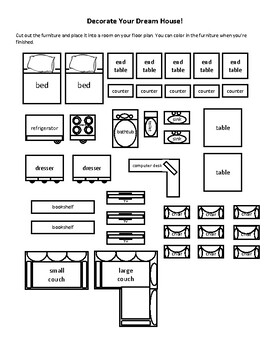
Furniture & Décor: Populate your spaces with to-scale furniture to ensure your great room isn’t overcrowded and your dining table fits comfortably with chairs pulled out. Arrange sofas, beds, and rugs to test traffic flow. This "virtual staging" is invaluable for understanding spatial relationships and avoiding costly furniture-sized mistakes later.
See It Before You Build It: The Power of 3D Visualization
One of the most transformative aspects of free online design tools is the ability to visualize your home in immersive 3D. Static 2D blueprints are hard for most people to interpret. But when you can take a virtual walk through your future home, the design becomes real and tangible.
- Real-Time 3D Views: As you draw walls in the 2D plan, a 3D model updates simultaneously. You can rotate the view, zoom in, and see your design from any angle—a bird’s-eye view of the roof, a street-level perspective of the facade, or a close-up of the kitchen island.
- Virtual Walkthroughs & Dollhouse Views: Many platforms offer a "walkthrough" mode, where you use keyboard controls to navigate through hallways and rooms as if you were there. The "dollhouse" view explodes the roof off, giving you a see-through look at the entire floor plan stacked vertically. These perspectives are crucial for understanding spatial relationships—how the living room connects to the kitchen, whether the guest bathroom is conveniently located, and how natural light will penetrate deep into the home.
- Sun & Shadow Studies: Some advanced free tools allow you to set the date, time, and geographic location to simulate how sunlight and shadows will move across your property. This helps in positioning windows for optimal daylight, placing patios for afternoon shade, or designing overhangs that block high summer sun but admit low winter sun—a key principle of passive solar design.
Seeing your home in 3D eliminates guesswork, builds confidence, and allows you to communicate your vision with crystal clarity to partners, family members, and eventually, contractors.
Save Thousands: How Free Design Tools Slash Costs
The financial benefits of designing your own house online for free are immediate and substantial. The most obvious saving is on architectural fees, which can range from 5% to 15% of the total construction cost for a custom home. For a $500,000 build, that’s $25,000 to $75,000 saved right at the start. But the savings extend far deeper into the construction phase:
- Eliminate Change Orders: Change orders during construction are the #1 budget killer. They are expensive because work must be redone, materials are wasted, and schedules are delayed. By thoroughly designing and visualizing everything beforehand—down to outlet locations and light switch placements—you arrive at the building phase with a complete, unambiguous set of plans. This drastically reduces the "I wish we had..." moments that lead to costly changes.
- Accurate Material Takeoffs: Free design software can generate precise material lists and quantity estimates for framing lumber, concrete, roofing squares, and even interior finishes. This allows you to get accurate bids from suppliers and contractors, prevents over-ordering, and gives you a powerful negotiating tool.
- Avoid Design Errors: Spotting a flaw on a computer screen is free. Finding it after the framing is up is catastrophic. You can easily test if a hallway is too narrow for moving furniture, if a bedroom door swings into a closet, or if the plumbing stack is in a logical location. Catching these issues in the design phase saves tens of thousands in rework.
Investing your time in the free design phase is the highest-ROI activity you can undertake for your custom home project.
Collaboration Made Simple: Share Your Vision with the World
Building a house is a team sport. Your free online design becomes the central communication hub for everyone involved—your partner, family, builder, architect (if you consult one later), and interior designer. Instead of trying to describe a complex spatial idea in words or with rough sketches, you simply share a link to your live, interactive 3D model.
- Family & Partner Alignment: Send the link to your spouse or kids. They can explore the house on their phone or computer, leave comments on specific rooms, and feel genuinely involved in the process. This collaborative approach prevents major disagreements later and ensures the final home meets everyone’s core needs.
- Contractor & Builder Bids: When you request bids, provide your completed design file. Contractors can see exact dimensions, window/door types, and material specifications. This leads to more accurate, comparable bids because everyone is pricing off the same set of data. It also signals to the builder that you are a serious, prepared client, which can attract higher-quality pros.
- Professional Consultations: Even if you eventually hire an architect to finalize plans for permitting, presenting them with your thoroughly developed design concept saves them time (and you money). You’re not starting from zero; you’re providing a detailed starting point for them to refine, engineer, and certify. This "design assist" model is becoming increasingly popular.
Building Green from the Blueprint: Sustainability Starts with Design
An environmentally conscious home isn’t just about solar panels on the roof; it begins with intelligent, sustainable design principles that you can implement for free in your planning software. The design phase is where you make the highest-impact decisions for energy efficiency and resource conservation.
- Passive Solar Design: Use your sun study tools to orient the home properly. Place larger windows on the south-facing wall (in the Northern Hemisphere) to capture winter sun for free heat, and use roof overhangs to shade those same windows from high summer sun. This reduces heating and cooling loads dramatically.
- Efficient Form & Layout: A simpler, more compact building shape (like a square or rectangle) has less surface area exposed to the elements than a complex, sprawling shape with many nooks and corners. This reduces heat loss/gain. An efficient interior layout minimizes the length of plumbing and ductwork runs, saving materials and energy.
- Natural Light & Ventilation: Strategically place windows to maximize cross-ventilation, reducing reliance on air conditioning. Design open stairwells and interior transom windows to allow light to penetrate deeper into the home, cutting daytime electricity use for lighting.
- Material Efficiency: By generating accurate material takeoffs, you avoid over-ordering. You can also design for standard material dimensions (e.g., 4x8 ft sheathing, 16-inch on-center framing) to minimize waste and cuts.
Designing with sustainability in mind from the first click creates a home that is cheaper to operate, healthier to live in, and kinder to the planet for decades to come.
Empowerment & Creativity: The Joy of Being the Architect of Your Life
Beyond the practical benefits of cost savings and error prevention lies something profound: the sheer joy and empowerment of creation. For the first time in history, you are not just a passive consumer of pre-fabricated houses or a client dictating vague wishes to an architect. You are the creative director. You get to experiment. You can try that radical, angled wall you saw in a magazine. You can see if a circular kitchen island actually works in your space. You can design a home that is a perfect, physical manifestation of your family’s unique lifestyle, values, and aesthetics.
This process builds an intimate understanding of your home’s anatomy. You will know exactly why the living room feels so spacious (it’s the 10-foot ceiling and the sightline to the backyard), why the mudroom is so functional (the built-in lockers and sink), and why the master suite is so serene (the careful placement away from the street noise). This knowledge is invaluable for maintenance, future renovations, and simply appreciating your home. You transition from a homeowner to a steward of a thoughtfully crafted environment.
Your Action Plan: Getting Started Today
Ready to begin? Here is a simple, actionable roadmap:
- Choose Your Platform: Research the top-rated free options. Look for ones with strong 3D capabilities, a large object library, and an active user community for support. Popular names include SketchUp Free, Floorplanner, RoomSketcher, and Planner 5D.
- Gather Your Data: Collect your site survey, any existing house plans if renovating, and your project brief from Step 2.
- Start Simple: Begin with a basic bubble diagram on paper, then translate it into a rough 2D floor plan in the software. Don’t worry about finishes yet.
- Iterate and Explore: Create 3-5 different layout variations. Play with room sizes, wall positions, and orientations. Use the 3D walkthrough to experience each one.
- Add Detail Gradually: Once the layout is solid, layer in doors, windows, then furniture, then finishes. Use the material list to check your budget assumptions.
- Share and Get Feedback: Send links to your trusted circle. Be open to constructive criticism, especially regarding flow and functionality.
- Export and Document: Most free tools allow you to export 2D plans, 3D images, and sometimes even basic material lists. Save these files. They form the foundation of your design development package.
Conclusion: Your Dream Home is a Click Away
The dream of a custom-designed home no longer requires a six-figure budget or a degree in architecture. The power to design your own dream house online for free is a reality, placing unprecedented creative control and financial prudence in your hands. These tools are not just for fun; they are serious, capable platforms that produce designs used by real builders and homeowners worldwide. They demystify the process, foster collaboration, enforce smart budgeting, and allow for deep personalization. The journey from a fleeting idea to a set of buildable plans has never been shorter, more accessible, or more exciting. So take that first step today. Open a browser, choose a tool, and start drawing the first wall of the home you’ve always imagined. Your future self, standing in the light-filled kitchen or relaxing in the perfectly proportioned living room, will thank you for the courage to design it yourself. The blueprint to your happiness is waiting to be created, and it starts with a single, free click.