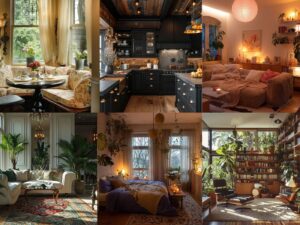
Design Your Own House Quiz: Discover Your Perfect Home Style In Minutes
Have you ever scrolling through Pinterest boards of stunning homes, wondering which architectural style truly speaks to your soul? Or perhaps you’ve visited a friend’s renovation and felt an instant connection to their open-floor plan, yet you can’t articulate why it feels so right? The journey to building or buying your dream home often starts with a vague feeling—a desire for something that reflects your personality, lifestyle, and dreams. But translating that feeling into concrete plans of square footage, rooflines, and material palettes can feel overwhelming. This is where a simple, powerful tool comes in: a design your own house quiz. More than just a fun distraction, these quizzes are a strategic first step in the home creation process, acting as a compass to navigate the vast world of architectural design and interior aesthetics. They bridge the gap between your subconscious preferences and a tangible vision you can share with architects, builders, or real estate agents.
In a world where the average homeowner spends over 18 months planning a custom build and where a staggering 70% of people report feeling stressed by design decisions, having a clear starting point is invaluable. A well-crafted home design quiz cuts through the noise. It uses psychological principles and design theory to ask targeted questions about your daily routines, aesthetic leanings, and practical needs, then synthesizes your answers into a coherent style profile. Think of it as a personality test for your future home. It doesn’t replace the expertise of a professional, but it equips you with a shared vocabulary and a foundational understanding of what you truly want, saving you countless hours, potential redesign costs, and the frustration of endlessly browsing without direction. Whether you’re sketching on a napkin or browsing listings, knowing your architectural style preference is the first brick laid in the foundation of your dream home.
The Transformative Power of a Home Design Quiz: More Than Just a Game
Before diving into how these quizzes work, it’s essential to understand why engaging with a design your own house quiz is a profoundly useful exercise for anyone on a home journey. The benefits extend far beyond simply labeling yourself as a "Modernist" or a "Farmhouse fan." This process is about self-discovery, communication, and confidence.
Unearthing Your Subconscious Style Preferences
Many of us have a jumbled collection of images and ideas in our heads—a farmhouse sink here, a vaulted ceiling there, a love for natural stone. We often don’t realize how these elements cluster into specific, recognizable architectural styles. A quiz forces you to make choices between options, which clarifies your instincts. For example, when asked to choose between a clean, minimalist kitchen with hidden appliances and a cozy, rustic kitchen with open shelving and patina, your immediate reaction reveals core values: do you prioritize sleek efficiency or warm, lived-in character? This process of elimination and selection helps you articulate preferences you might not have known you held. It moves you from a vague sense of "I like pretty houses" to a specific understanding of "I am drawn to the horizontal lines and integration with nature found in Prairie-style homes."
Creating a Shared Language for Professionals
One of the biggest challenges in custom home design is the translation gap between a homeowner’s dreams and an architect’s technical plans. Saying "I want something cozy but open" is subjective. Saying "I scored high on Modern Farmhouse and Craftsman styles on my design quiz, and I particularly love the idea of a wraparound porch and shiplap accents" provides a concrete, visual reference point. This shared vocabulary dramatically improves initial consultations. Architects and designers can immediately grasp your aesthetic zone, allowing them to propose ideas that resonate from the start. It turns the conversation from "What do you like?" to "How can we adapt the Modern Farmhouse aesthetic to fit your sloped lot and desire for a home office nook?" This efficiency saves time and money in the exploratory phase.
Avoiding Costly Design Mistakes and Regrets
The financial cost of changing a home’s fundamental style mid-construction is astronomical. A design quiz acts as a low-stakes trial run. It helps you identify potential conflicts before any concrete is poured. Perhaps you love the look of a minimalist, concrete-heavy Ultra-Contemporary home but the quiz reveals you also scored highly on "Need for abundant storage" and "Preference for soft, textured fabrics." This internal contradiction is a crucial insight! It signals that a pure, stark modern style might leave you feeling unsatisfied, prompting you to consider a Transitional style that blends clean lines with warmer, more tactile materials. Catching this disconnect early prevents the heartbreak of moving into a beautiful but emotionally uncomfortable space. According to the National Association of Home Builders, nearly 60% of custom home owners make at least one major design change they regret; a preliminary style assessment is a key tool to avoid joining that statistic.
Boosting Your Confidence in the Decision-Making Process
The sheer volume of choices in home design—from roofing materials to window styles to interior finishes—can lead to decision fatigue. A house style quiz provides an anchor. When faced with a thousand options, you can filter them through your established style profile. "Does this quartzite countertop fit the Mediterranean vibe I’m going for?" "Would these sleek, black metal railings complement my Scandinavian-inspired open plan?" This filtering mechanism simplifies choices and builds your confidence. You move from second-guessing every selection to making empowered decisions aligned with a cohesive vision. This confidence is contagious and makes the entire building or buying process more enjoyable and less stressful.
How Does a "Design Your Own House Quiz" Actually Work?
Understanding the mechanics behind these quizzes demystifies their results and helps you use them most effectively. They are not magic; they are carefully constructed tools based on design psychology and user experience principles.
The Science of Selection: Question Design and Flow
A high-quality home design quiz doesn’t ask "Do you like modern or traditional?" in a vacuum. Instead, it uses a series of layered, experience-based questions. The flow typically follows a pattern:
- Lifestyle & Function: Questions about your household (family size, work-from-home needs, entertaining habits), your relationship with the outdoors, and your storage requirements. These anchor the design in reality.
- Aesthetic Preferences: Visual questions are paramount. You’ll be shown pairs of photos—exteriors, interior rooms, details like staircases or fireplaces—and asked to choose which one you’re drawn to. This bypasses intellectualizing and taps into raw visual preference.
- Material & Detail Affinity: Questions about textures (smooth concrete vs. rough-hewn wood), colors (neutral palettes vs. bold accents), and decorative elements (ornate molding vs. simple trim).
- Emotional Response: Some quizzes ask how certain spaces make you feel (calm, energized, cozy, sophisticated). This connects style to emotional outcome, which is the ultimate goal.
Each answer is weighted and mapped to a database of architectural styles, which are defined by specific combinations of these traits. For instance, a Craftsman style is characterized by natural materials (stone, wood), low-pitched roofs, wide eaves, and an emphasis on handcrafted details—traits that will be probed through different questions.
Interpreting Your Results: Beyond the Label
You might receive a result like "Your style is Modern Farmhouse." Don’t stop there. The most valuable quizzes provide a profile, not just a label. This profile should include:
- Key Characteristics: A description of the style’s signature elements (e.g., board-and-batten siding, metal roofs, apron-front sinks, neutral color schemes with black accents).
- Why It Fits You: An explanation linking your quiz answers to the style (e.g., "You chose cozy, family-friendly interiors but also sleek, simplified exteriors, which is the hallmark of Modern Farmhouse.").
- Potential Pitfalls: A warning about how the style can be mis-executed (e.g., "Avoid overly rustic or cluttered elements that can make it feel kitschy rather than chic.").
- Related Styles: Suggestions for styles that share your DNA, like Industrial or Transitional, giving you flexibility.
- Visual Gallery: A curated set of images showcasing the style in real homes.
This depth transforms the quiz from a game into an educational briefing. You now have a research starting point. You can Google "Modern Farmhouse kitchen backsplashes" or "Contemporary Craftsman exterior" with a focused lens, making your online research exponentially more productive.
The Limitations: What a Quiz Can’t Tell You
It’s crucial to understand the boundaries of this tool. A quiz cannot account for:
- Your Specific Site: Topography, views, zoning laws, and neighborhood covenants dramatically influence what you can build. A style perfect for a flat, suburban lot may be impractical on a steep, forested hillside.
- Your Exact Budget: The quiz identifies aesthetic preferences, not cost. A Mediterranean villa with hand-painted tiles and wrought iron is inherently more expensive than a Minimalist home with polished concrete and drywall. You must overlay your budget on the style.
- Local Building Codes & Climate: A style with large overhangs may be perfect for sun-drenched regions but problematic in heavy snow areas. A quiz doesn’t know your local weather patterns.
- The Nuance of Personal Taste: You might love elements of several styles. Your result might be a "fusion" or "eclectic" blend. The quiz is a guide, not a prison.
Therefore, treat your quiz result as a hypothesis, not a final verdict. It’s your starting hypothesis for "My home should feel like [Style Profile]." You will test and refine this hypothesis with a professional, your site, and your budget.
From Quiz to Reality: Actionable Steps After You Get Your Result
Discovering your potential style is the spark. Now, you need to fan that spark into a flame of actionable plans. Here is a step-by-step guide to leveraging your design your own house quiz results.
Step 1: Deep Dive Research with a Focused Lens
Armed with your style name and key characteristics, conduct targeted research. Create a digital mood board (on Pinterest, Instagram saves, or a simple folder). But don’t just save every image tagged with your style name. Be critical. Save images that resonate because they embody the core principles of your style, not just a single trendy element. For example, if your style is Scandinavian, save images that highlight functionality, light, and natural materials, not just one with a hygge throw blanket. Look for floor plans, exterior shots, and detail close-ups. This curated board will become your visual bible.
Step 2: Consult with the Right Professionals Using Your New Vocabulary
Now, schedule consultations with an architect, a custom home builder, or a interior designer. Begin the conversation with your quiz insights. Say: "Based on a comprehensive style assessment, I'm strongly aligned with [Your Style]. Here’s my mood board that captures the essence of what I'm looking for in terms of [mention 2-3 key traits, e.g., connection to outdoors, material honesty, flexible spaces]. Can you show me examples of your work that explore this aesthetic, and how it might adapt to [mention your lot or budget constraints]?" This approach signals you are an informed, serious client. It allows the professional to immediately assess if their design philosophy aligns with yours, saving everyone’s time.
Step 3: Analyze Your Existing Space (If Renovating or Buying)
If you’re not building from scratch but renovating or buying, use your style profile as a filter for your current environment. Walk through your home and ask:
- Which existing features already align with my target style? (e.g., "These original hardwood floors are perfect for a Craftsman feel.")
- Which elements feel jarring or out of place? (e.g., "This ornate chandelier clashes with the Modern vibe I want.")
- What small, inexpensive changes can I make to move the space toward my ideal style? (e.g., swapping cabinet hardware, adding trim, changing light fixtures).
This analysis helps you understand the "lay of the land" and prioritize changes, making your budget go further.
Step 4: Create a "Style Priority" List
Rank the elements of your identified style. What is non-negotiable? What is desirable but flexible? For a Modern style, perhaps clean lines and abundant glass are non-negotiable, while specific flooring material is flexible. For a Tudor style, the steeply pitched roof and half-timbering might be essential, while the interior layout can be more open. This list is your decision-making shield when faced with compromises. You can ask, "Does this proposed change support my Priority #1 (integration with the garden)?" If not, it’s easier to push back or adjust.
Step 5: Use Your Style to Guide Material and Finishes Selections
This is where the quiz pays off in spades during the construction or renovation phase. When selecting:
- Exterior Siding: Your style dictates the material (clapboard for Colonial, stucco for Spanish Revival, fiber cement for Modern).
- Roofing: The shape (gabled, hipped, flat) and material (asphalt shingle, tile, metal) are style-specific.
- Windows: The placement (large picture windows for Contemporary, double-hung with muntins for Traditional) and style (casement, awning) matter.
- Interior Trim: The profile (simple, square edge vs. ornate crown molding) and height (tall baseboards for Transitional) are defined by style.
Having your style guide in hand during these selections prevents you from being swayed by fleeting trends that don’t serve your core aesthetic.
Addressing Common Questions About Home Design Quizzes
Q: Are these quizzes accurate? Can I really trust the result?
A: Think of accuracy in terms of direction rather than exact destination. A good quiz has a high probability of identifying your dominant style archetype. Its accuracy depends on honest, instinctive answering (don’t overthink!). The result is a powerful indicator, but your own research and professional feedback will refine it. It’s 80% of the way there; the last 20% is nuanced personalization.
Q: What if I get a style I don’t like or have never considered?
A: This is a fantastic outcome! It means the quiz has uncovered a latent preference. Don’t reject it outright. Research that style deeply. Look at beautiful, well-executed examples. Often, we dismiss styles based on clichés or poor implementations. You might discover a love for Mid-Century Modern’s connection to nature, not just its iconic furniture. Give it a chance; it could be the fresh perspective you needed.
Q: I love multiple styles. Can I combine them?
A: Absolutely, and this is common. Your result might be "Eclectic" or "Transitional," which are styles defined by blending. The key is to have a dominant style (60-70%) and an secondary influence (30-40%). For example, a Modern base with Wabi-Sabi (Japanese aesthetic of imperfection) accents. Your research should focus on how these styles successfully merge in real homes. A good architect is essential here to ensure the blend feels intentional, not messy.
Q: Should I take multiple quizzes from different sites?
A: Yes, this is a smart strategy. Different quizzes have different algorithms and photo libraries. Taking 2-3 reputable quizzes and looking for consistency in results is a strong signal. If three quizzes point to styles within the same family (e.g., Modern, Contemporary, Minimalist), you can be very confident in that direction. If results are wildly different, it may indicate your taste is truly eclectic, or that you need to answer questions more intuitively.
Q: Is there a "best" or most popular style quiz?
A: The "best" quiz is one with high-quality, diverse photography, clear result explanations, and a logical question flow. Look for quizzes from established architectural magazines (like Architectural Digest), major home building sites, or design software companies. Avoid quizzes that feel like they’re just collecting emails with superficial results. Read the "About" or methodology page if available. The best ones often explain their design philosophy.
The Final Blueprint: Making Your Dream Home a Reality
A design your own house quiz is not the endpoint; it is the critical starting gun. It transforms the abstract longing for "a nice house" into a specific, researchable, and communicable design brief. It empowers you to enter the complex world of home design with confidence, clarity, and a vocabulary that commands respect from professionals. In an industry where the average cost of a custom home can exceed $500,000, this initial investment of 10-15 minutes is arguably the highest-ROI activity you can undertake.
The journey from quiz result to keys in hand is a collaborative one. Use your style profile as the North Star, but remain open to the adaptations your site, budget, and expert advice will necessitate. Perhaps your ideal Coastal style needs to be adapted for a landlocked, forested lot—focusing on airy interiors and natural light rather than nautical accents. Perhaps your Industrial loft dream requires softening with Scandinavian warmth to feel livable. This fusion is where true, personalized architecture is born.
So, take the quiz. Research the result. Curate your board. Then, take that board and your newfound confidence to a professional. Start the conversation not with uncertainty, but with a clear, compelling vision: "This is the feeling I want my home to have. These are the elements that matter. How do we make it real, right here on this land, within this budget?" That is the power of designing your own house, starting with a simple quiz. Your dream home isn’t a distant fantasy; it’s a style profile waiting to be built. Begin the discovery today.