Dream Home Decorator Sims 4 Review: Is This Expansion Worth Your Time?
Have you ever scrolled through Pinterest or watched a home renovation show and thought, "I could design a better space than that"? For countless Sims 4 players, that fantasy is a core part of the game’s appeal. But what if you could turn that passion into a structured, goal-oriented career within the game? That’s the promise of the Dream Home Decorator Game Pack. This Dream Home Decorator Sims 4 review will dive deep into whether this pack delivers on its glossy premise, transforming you from a casual builder into a professional interior designer with a roster of demanding clients. We’ll unpack the career mechanics, scrutinize the new build/buy catalog, and determine if this pack earns a permanent spot in your game library or if it’s just a fleeting trend.
The Dream Home Decorator Game Pack, released in July 2021, represents a significant shift in how The Sims 4 handles home design. Instead of the open-ended sandbox building we’re used to, it introduces a structured Stylist career where you take on clients, fulfill their specific—and often quirky—requests, and earn Simoleons and satisfaction points. It’s a focused experience that caters directly to players who find joy in the process of decorating, not just the final result. But does the gameplay loop stay fresh, and does the new furniture justify the purchase? Let’s break it down piece by piece.
What Exactly Is the Dream Home Decorator Game Pack?
At its heart, the Dream Home Decorator Game Pack is a thematic expansion that bundles a new active career, a suite of build/buy objects, and a handful of gameplay systems all centered around the profession of home styling. Unlike full expansions that add entire worlds or life states, a Game Pack is more targeted, and this one is laser-focused on the interior design process. The core innovation is the "Renovation" system, which turns a Sim’s home into a project site with a clear before-and-after.
When you sign up for the Stylist career, you’re not just going to an office. Your workplace is your client’s home. You start at the entry-level "Home Stylist" rank and work your way up to the prestigious "Interior Design Icon." Each promotion unlocks new abilities, better-paying clients, and more challenging requests. The career is active, meaning you control your Sim as they interact with the space, place objects, and converse with the client. This active participation is key—it’s not a "click work and wait" career.
The pack also introduces a new "Design Style" system. There are five core styles: Modern Industrial, Boho-Chic, Mid-Century Modern, French Country, and Contemporary Classic. Your success depends on correctly identifying and applying the client’s preferred style to their home. This adds a delightful puzzle element; you must read the client’s moodlet, examine their existing belongings, and choose furniture that fits the aesthetic. It transforms decorating from a personal preference exercise into a diagnostic and problem-solving task.
The Stylist Career Deep Dive: A Day in the Life of a Sim Designer
Client Requests: The Heart of the Gameplay
Every job begins with a client meeting. The client, a pre-made Sim with their own personality and backstory, will state their primary goal (e.g., "I want a cozy reading nook") and their desired Design Style. They’ll also have a "Dealbreaker"—a specific object or style element they absolutely must have or must avoid. Ignoring the dealbreaker is a quick path to a failed gig and a furious client.
Your in-game notebook becomes your best friend. It logs the client’s requests, the style, the budget, and the dealbreaker. This isn’t just flavor text; it’s your project brief. For example, a client wanting a Boho-Chic style with a dealbreaker of "no wicker" forces you to source macramé, plants, and textured rugs while avoiding that specific material. This mechanic encourages players to learn the visual language of each style, making you a more knowledgeable virtual designer.
The Renovation Process: From Cluttered to Coveted
Once the brief is set, you enter the "Renovation" phase. The home is frozen in time—you can’t edit it outside of this mode. You have a limited budget (your client’s money) and a time limit (usually a few in-game hours). Your tools are the new Dream Home Decorator build/buy objects, filtered by style in the catalog. The process is wonderfully tactile: you drag a sofa into position, hang a painting, swap a lamp. Each object you place is evaluated against the style and the client’s evolving satisfaction.
A crucial new feature is the "Client Satisfaction" meter. As you place style-appropriate objects, the meter fills. Placing something off-style or ignoring the dealbreaker causes it to plummet. The client will also give verbal feedback, exclaiming "I love this!" or "That’s not my vibe at all." This immediate feedback loop is incredibly satisfying. There’s a genuine thrill in seeing that meter hit 100% and knowing you’ve nailed the assignment.
Career Progression and Unlockables
Promotion isn't just about a higher salary. Each career rank unlocks new abilities that dramatically change gameplay. At lower levels, you might only be able to place objects. By mid-career, you unlock "Redecorate" (to swap existing client objects for your own), "Rearrange" (to move their existing furniture), and eventually "Style from Scratch" (to clear the room entirely). These abilities are what transform the career from a simple placement game into a true design sandbox.
Higher ranks also attract wealthier clients with larger homes and bigger budgets, and introduce more complex requests like "design an entire home" instead of a single room. The pinnacle, Interior Design Icon, allows you to design homes for celebrity clients, adding a layer of prestige. The progression feels meaningful, constantly rewarding you with more creative power and financial reward for your growing skillset.
The New Build/Buy Catalog: Objects, Objects, Everywhere
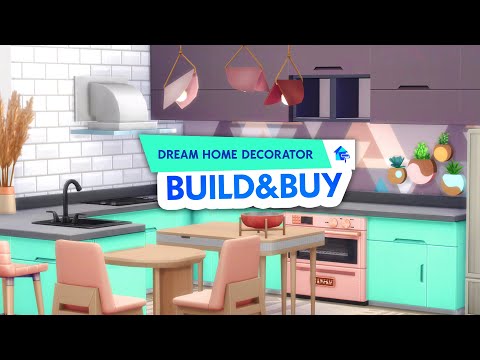
The Dream Home Decorator pack adds over 200 new build and buy mode objects. The quality and cohesion of these items are arguably the pack’s strongest selling point. Each of the five design styles has a distinct, well-realized collection of furniture, decor, and fixtures.
- Modern Industrial: Think exposed brick, metal shelving, reclaimed wood tables, and minimalist lighting. It’s perfect for lofts and urban apartments.
- Boho-Chic: This is where the pack shines with personality. Expect rattan furniture, lush hanging plants ("Monstera Deliciosa" is a showstopper), colorful patterned rugs, macramé wall hangings, and eclectic mixed materials.
- Mid-Century Modern: Clean lines, teak wood, iconic chair designs (like the Eames lounge chair), and atomic age starburst clocks. It’s sleek and timeless.
- French Country: Ornate details, floral fabrics, rustic wooden tables, porcelain sinks, and vintage-inspired lighting. It feels cozy and elegant.
- Contemporary Classic: The most versatile style, blending traditional silhouettes with modern simplicity. Think neutral sofas, classic moldings, and subtle metallic accents.
What sets these objects apart is their "Style Filter" integration. In Build/Buy mode, you can filter the entire catalog by these five styles. This is a game-changer for players who struggle to create cohesive looks. If you’re working on a Boho-Chic client, you simply select the Boho filter and everything you see will match. It streamlines the design process immensely and teaches players about aesthetic grouping.
Beyond furniture, the pack introduces useful new windows, doors, floors, and wallpapers that match each style. There are also fantastic new lighting fixtures and small decor items like throw pillows, books, and plants that are essential for adding those finishing touches that boost client satisfaction. The attention to detail—like the different textures on a Boho rug versus a Modern one—makes the world feel richer.
The Verdict: Pros, Cons, and Common Player Questions
The Shining Strengths (Pros)
- Focused, Rewarding Gameplay Loop: The cycle of meeting a client, diagnosing their style, renovating, and receiving praise (and a paycheck) is deeply satisfying. It gives purpose to building.
- Excellent, Cohesive Object Sets: The furniture is not only stylish but also highly functional and well-themed. The style filter is a masterpiece of UX design for The Sims.
- Teaches Real Design Principles: Players intuitively learn about balance, focal points, color theory, and style cohesion. It’s educational fun.
- High Replayability: With multiple clients, random style/dealbreaker combinations, and different home layouts, no two gigs are exactly the same.
- Perfect for Storytellers: The client Sims have personalities. You can imagine their backstory—the young artist who wants a Boho studio, the retired professor needing a French Country study. It fuels narratives.
The Flickering Lights (Cons)
- Career Repetition: The core loop, while satisfying, can feel samey after dozens of gigs. The client dialogue is limited, and the process of "place object, check meter" is constant.
- Limited Object Versatility: While the style-filtered objects are great for their intended style, they can look jarring if mixed incorrectly. A player wanting to blend, say, Mid-Century and Industrial might find the pieces don't always play nice.
- Small World Impact: This pack doesn’t change the base game world. It’s a self-contained career. If you don’t care about the career, the objects are still useful, but you’re paying primarily for the gameplay system.
- Client AI Quirks: Sometimes clients will pathfind poorly around your renovations, standing in the way or getting stuck. It’s a minor frustration but noticeable.
- Not for Non-Builders: If you find building and decorating a chore, this pack will feel like mandatory homework. It offers little for Simmers who only care about social interactions or careers outside the home.
Who Is This Pack Actually For? (The Target Audience)
Based on this Dream Home Decorator Sims 4 review, the pack is a must-buy for:
- The Avid Builder/Decorator: If you spend more time in Build/Buy than Live mode, this pack will give your hobby a thrilling new framework and reward system.
- The Storyteller Who Loves Setting: If you create families and immediately design their homes to match their personalities, this career lets you do that as a Sim, with in-game consequences.
- Players Craving Structure: If the open-ended nature of The Sims sometimes leaves you wondering "what should I do next?", this pack provides a clear, goal-oriented checklist.
- Fans of Design Games: If you enjoy games like House Flipper or Design Home, this is the closest The Sims 4 gets to that experience.
It is a skip or wait-for-sale for:
- Players who rarely build or decorate.
- Those who already feel overwhelmed with existing packs and want only core gameplay additions.
- Simmers seeking major world or life state changes (this is purely a build/career pack).
Addressing the Big Questions
Q: Does it work with other packs?
A: Absolutely. You can use Dream Home Decorator objects alongside items from Cottage Living, Eco Lifestyle, Snowy Escape, etc. The style filter only applies to the new pack’s objects, but you can freely mix and match in a renovation, though it might confuse the style-matching AI. It’s compatible.
Q: Is the career grindy?
A: It can be. The early ranks are slow, with low pay and few abilities. The satisfaction comes from the creative act itself. If you don’t enjoy the decorating process, the grind will feel palpable. If you love it, you’ll be hooked.
Q: Can I use these objects without doing the career?
A: Yes! All build/buy objects are available in the regular catalog for any Sim in any mode. You can use them for your own builds freely. The career is the gameplay shell around them.
Q: How does it compare to the Cottage Living farm building or Eco Lifestyle eco-build items?
A: Those packs introduced fantastic themed objects, but they were additions to the general catalog. Dream Home Decorator is different: it’s a complete, self-contained design system. The objects are designed to work together within five specific, curated styles, supported by a career that teaches you how to use them. It’s more about curation than just addition.
Conclusion: Should You Hire This Pack for Your Game?
So, what’s the final word in this Dream Home Decorator Sims 4 review? This Game Pack is a specialized tool for a specific type of player. It is not a broad, game-changing expansion. Instead, it is a deeply satisfying, expertly crafted experience for the Sim who looks at a blank lot and sees a potential masterpiece. The active Stylist career provides a much-needed structure and purpose for the act of building, transforming it from a pastime into a profession with clear goals and rewards.
The object sets are top-tier, offering five complete, visually distinct styles that are a joy to mix and match (within their own families). The style filter is a quality-of-life feature so good it should be standard in all future build/buy updates. While the career can become repetitive and won’t appeal to everyone, for its target audience—the designers, the decorators, the storytellers of space—it is an absolute home run.
If you’ve ever wished The Sims 4 had a more guided, rewarding approach to interior design, the Dream Home Decorator pack delivers that fantasy with style and substance. It understands the joy of a perfectly styled room and gives you the contracts, clients, and catalog to chase that feeling endlessly. For the right player, it’s not just a pack; it’s a profession. And in the ever-expanding world of The Sims 4, that’s a rare and valuable thing indeed.