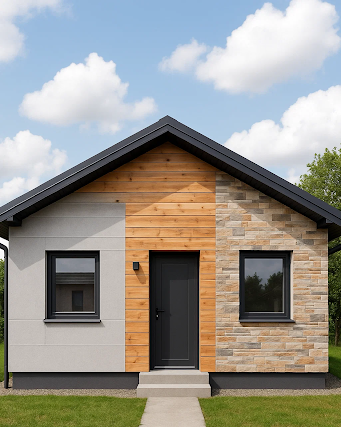
Dream House Design On A Low Budget: Your Practical Blueprint To Affordable Luxury
Have you ever scrolled through Pinterest or watched a home renovation show and thought, "That stunning, custom-designed dream house is for someone else, not for me and my budget"? The belief that a truly personalized, beautiful home is reserved for the wealthy is one of the most pervasive myths in housing today. What if we told you that with clever planning, strategic sacrifices, and a dash of creativity, your vision for a dream house design on a low budget is not only possible but entirely achievable? The journey to your ideal home doesn't have to start with a massive loan or years of financial strain. It begins with a shift in mindset—from seeing limitations to seeing opportunities for innovation. This guide will dismantle the budget barrier, providing you with a comprehensive, actionable blueprint to design and build the home you've always wanted, without the financial nightmare.
The Foundation of Frugality: Strategic Planning Before the First Blueprint
The single most critical phase in any low-budget dream house design is the planning stage. Rushing into design or construction without a meticulous plan is the fastest route to budget blowouts. This is where your dream transitions from a vague wish to an executable strategy.
Crafting a Realistic, Detailed Budget: Your Financial North Star
Before you even think about floor plans or paint colors, you must establish a concrete, all-inclusive budget. This isn't just a guess at construction costs; it's a full financial map. Start by determining your total available capital, including savings, loans you're comfortable with, and any potential assistance. Then, break down costs meticulously: land purchase (if applicable), permits and fees, site preparation, foundation, framing, exterior finishes, interior systems (plumbing, electrical, HVAC), interior finishes, landscaping, and a non-negotiable contingency fund of 10-20%. According to the National Association of Home Builders (NAHB), unexpected costs are the norm, not the exception. Use online cost estimators for your region as a starting point, but get multiple quotes from local contractors for accuracy. This budget document is your sacred contract; every design decision must be measured against it.
The Power of the Prioritized Wishlist: Know What Truly Matters
With your budget set, sit down and create two lists. The first is your "Non-Negotiables"—the 3-5 elements that would make the house feel incomplete without them. For one person, this might be a large kitchen island; for another, a home office with natural light. The second list is your "Nice-To-Haves." This brutal prioritization is crucial. When costs inevitably need trimming, you know exactly where to cut from the "Nice-To-Haves" list without sacrificing your core vision. This exercise forces clarity and prevents emotional, budget-busting decisions mid-project.
Site Selection and Orientation: The Free Design Tool
Your building site is a free, immutable part of your design. Choosing the right lot and orienting your home correctly can save thousands in future energy costs and dictate smarter design choices. A south-facing orientation in the northern hemisphere allows for maximum passive solar heat in winter and can be shaded in summer with deep roof overhangs or deciduous trees. This reduces reliance on heating and cooling systems. Similarly, leveraging natural wind patterns for cross-ventilation can minimize the need for expensive HVAC. A sloped lot might offer a walk-out basement, adding valuable living space at a lower cost than a full foundation. Work with your site, not against it.
Smart Design Hacks for Maximum Impact, Minimum Square Footage
The most expensive part of any home is its size. Every additional square foot adds material, labor, and long-term maintenance costs. Therefore, the golden rule of low-budget dream design is: build smart, not big.
Embracing Efficient, Flexible Floor Plans
Forget sprawling, wasteful spaces. Focus on an efficient, open-concept layout that serves multiple purposes. A great room that combines living, dining, and kitchen areas reduces hallway space and walls. Design rooms with flexible uses—a guest room that doubles as a home office or a dining nook that can host homework sessions. Consider "universal design" principles like wider doorways and step-free entries not just for accessibility, but for future-proofing and creating a more spacious feel without added square footage. Think carefully about ceiling heights; standard 8-foot ceilings are perfectly adequate and save on materials and HVAC costs compared to vaulted ceilings.
The Magic of Multi-Functional Spaces and Built-Ins
In a compact home, every inch must earn its keep. This is where built-in furniture shines. A window seat with storage underneath, a Murphy bed (wall bed) in a home office, or a dining bench with hidden compartments eliminate the need for freestanding furniture, saving money and creating a cleaner, more custom look. A well-designed staircase can incorporate drawers or a reading nook. These integrated solutions are often more expensive upfront but save significantly on purchasing separate furniture and maximize usable space.
Strategic Window Placement: Light, Views, and Cost Control
Windows are a major budget line item. Be strategic, not excessive. Place windows to capture the best views, maximize natural light in primary living areas, and support passive ventilation. Smaller, high-quality windows in less critical areas (like hallways or garages) are more economical. Consider the cost of window treatments as part of your decision—large, custom drapes for floor-to-ceiling windows add up quickly. Sometimes, a single, large picture window in a living room is more impactful and cost-effective than several smaller ones.
Material Selection: Where to Save and Where to Splurge
Not all materials are created equal, and your budget allocation here makes or breaks your financial plan. The key is understanding the hierarchy of visibility and durability.
The "Save" Categories: Hidden and High-Volume Items
Areas that are hidden from view or used in high volume are prime candidates for cost-saving materials. This includes insulation, drywall, standard-grade lumber for framing, and basic subflooring. You don't need premium, designer-grade insulation; code-compliant, effective insulation is sufficient. For flooring, consider luxury vinyl plank (LVP) or laminate in high-traffic areas—modern versions look fantastic and are far more affordable than solid hardwood. Use standard, paintable interior doors and trim (casing and baseboards) instead of ornate hardwood. These choices free up budget for elements people actually see and touch.
The "Splurge" Categories: The "Wow" Factor and Long-Term Value
Conversely, invest in items that are highly visible, used constantly, or offer long-term savings. Kitchen and bathroom fixtures (faucets, showerheads) are touched daily; buy the best you can afford for durability and feel. Countertops in the kitchen are a major focal point. Quartz or granite offer great value for their durability and aesthetic impact. Exterior siding is your home's face and primary weather barrier; investing in a durable, low-maintenance option like fiber cement or certain vinyl products saves on future repainting and repairs. Energy-efficient windows and appliances have a higher upfront cost but pay for themselves in reduced utility bills over time—a critical saving for a low-budget homeowner.
The Power of Alternative and Reclaimed Materials
Think outside the big-box store. Reclaimed wood from old barns or factories can be stunning for feature walls, beams, or flooring at a fraction of the cost of new specialty lumber. Concrete countertops, while trendy, can be a DIY project or sourced locally for less than manufactured stone. Exposed structural elements like polished concrete floors or visible ceiling beams (if the structure allows) eliminate the cost of additional flooring or ceiling materials. Check salvage yards, Habitat for Humanity ReStores, and online marketplaces for doors, light fixtures, hardware, and even lumber.
The DIY Frontier: What You Can Realistically Do Yourself
Taking on some work yourself is the most direct way to reduce labor costs, which typically account for 40-60% of a build's total price. However, honesty about your skills and time is paramount.
The DIY Sweet Spot: Finishing Work and Cosmetic Updates
The safest and most impactful DIY areas are finishing work. This includes painting (interior and exterior), installing flooring (especially click-lock LVP or laminate), hanging doors and trim, installing backsplashes, and basic landscaping. These tasks require less specialized skill, have a forgiving learning curve, and mistakes are often easily corrected. Painting alone can save thousands. A weekend spent installing your own LVP can save hundreds in labor.
The "Proceed with Extreme Caution" Zone: Structural, Mechanical, and Code-Heavy Work
Never DIY structural elements (load-bearing walls, roof trusses), electrical wiring, plumbing lines, or HVAC installation. These require licensed professionals for safety, legal compliance (to pass inspections), and insurance purposes. A mistake here is catastrophic, dangerous, and will likely cost more to fix than the initial savings. You can, however, fixture-out after the pros are done—installing light fixtures, toilets, faucets, and cabinet hardware. This is a great way to learn and save.
Building a "Dream Team" of Subcontractors
If you're acting as your own general contractor (GC), you must become an expert manager. Vet subcontractors meticulously: check licenses, insurance, references, and multiple past job sites. Get detailed, itemized quotes. A low bid is often a red flag for change orders later. Clear, written contracts are essential. If managing subs feels overwhelming, consider hiring a GC for a fixed fee or a construction manager who oversees the project for a percentage. Their expertise can prevent costly errors and often pays for itself.
Phasing Your Dream: Building in Stages for Ultimate Affordability
If your full vision exceeds your current budget, phasing is your ultimate strategic tool. This means building a solid, livable core home now and adding elements later as finances allow.
Phase 1: The "Shell and Core"
This first phase includes the non-negotiable, hardest-to-add-later elements: foundation, framing, roof, exterior walls, windows, doors, basic utilities (plumbing rough-in, electrical rough-in, HVAC ductwork), and a kitchen and bathroom core. You finish the interior with basic, durable materials: painted drywall, simple flooring, and essential fixtures. This creates a complete, code-compliant, weather-tight home with one full bathroom and a functional kitchen. It's small but perfectly liveable. You can move in and stop renting, building equity immediately.
Phase 2: The "Finishing and Flourishes"
With time and savings, phase two focuses on interior finishes: upgrading flooring, adding cabinetry and countertops, finishing basement or attic spaces, installing trim and molding, and adding cosmetic lighting. This is also the phase for landscaping, decks, patios, and porches. These are expensive but can be done incrementally—a basic deck now, a pergola later.
Phase 3: The "Dream Upgrades"
Finally, phase three is for the pure "wish list" items: a gourmet kitchen with high-end appliances, a spa-like master bath, a home theater, a swimming pool, or elaborate outdoor kitchens. By phasing, you avoid debt, adapt to life changes, and ensure the core structure is sound before adding luxury. Many families find they never even get to phase three, perfectly happy in their efficiently designed, debt-free core home.
Real-World Inspiration: Low-Budget Dream Homes That Defy the Odds
Let's move from theory to proof. Consider the "Tiny House" movement, where people live comfortably in 200-400 square feet. While not for everyone, the principles—extreme efficiency, multi-functional furniture, clever storage, and high-quality, durable materials over size—are directly applicable to any budget. A 1,200 sq ft home built with tiny-house efficiency feels spacious and costs far less to build and maintain.
Another model is the "Kit House" or Mail-Order Home of the early 20th century, updated for today. Companies like Connect Homes or Blokable offer modern, modular, factory-built homes that are significantly cheaper and faster to construct than traditional site-built homes due to reduced labor waste and weather delays. The savings are passed to the buyer. Similarly, "Barndominiums" (converting metal barn shells into living spaces) have gained massive popularity. The shell is surprisingly inexpensive, allowing the budget to be allocated to stunning interior finishes, high-end insulation, and beautiful plumbing fixtures—the things you truly experience.
Conclusion: Your Dream Home is a Series of Smart Choices, Not a Fortune
Designing and building a dream house on a low budget is not about deprivation; it's about intentionality. It’s the art of distinguishing between what society tells you a "dream home" must have (size, specific finishes, trendy features) and what you genuinely need and value to feel joyful and at peace in your space. It starts with that crucial, unglamorous budget spreadsheet and a ruthless prioritization of your wishlist. It thrives on smart design—efficient layouts, multi-functional rooms, and strategic orientation that leverages nature for free. It’s fueled by savvy material selection, knowing where to save on the hidden and splurge on the seen. It’s empowered by the honest assessment of what you can DIY and the wise investment in professionals for what you cannot. And it is ultimately liberated by the strategy of phasing, transforming an impossible future cost into a series of manageable, present-day achievements.
Your dream house design on a low budget is not a compromise. It is a curated, intelligent, and deeply personal creation. It is a home that reflects your priorities, your creativity, and your financial wisdom. It is a home built not on debt, but on a foundation of clear-eyed planning and empowered choices. Start with that budget. Make that wishlist. Embrace the challenge. Your affordable dream home awaits, not in a magazine, but in the smart, strategic decisions you make every step of the way.