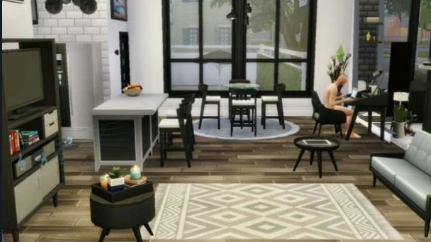
Sims 4 Dream Home Decorator: How Do You Know Which Room To Decorate First?
Sims 4 Dream Home Decorator: How do you know which room to tackle first? It’s the pivotal question that separates a frustrating, low-scoring renovation from a lucrative, five-star career triumph. Stepping into the Dream Home Decorator career in The Sims 4 is exhilarating. You’re no longer just building; you’re a professional interior designer, tasked with transforming clients' houses into stunning, functional masterpieces. But that first visit to a client’s home can be overwhelming. Do you rush to the glamorous master bedroom? Or should you start with the practical, often-dreaded bathroom? The wrong choice can lead to a cascade of low scores and frustrated clients, while the right one sets the stage for a perfect renovation and a booming business. This guide will decode the game’s hidden logic, giving you a clear, actionable framework to decide exactly which room to decorate first every single time, ensuring you consistently earn those coveted five-star ratings and maximize your Simoleon earnings.
Understanding the core mechanic of the Dream Home Decorator career is the first step to mastering it. Unlike the standard Build/Buy mode, this career operates on a strict client satisfaction scoring system. Your goal isn't just to make a room pretty; it's to fulfill a specific, often unspoken, set of client needs based on their traits, likes, dislikes, and the room's primary function. Each renovation project is a puzzle. You’re given a budget, a list of required objects (like a bed for a bedroom), and a client with a distinct personality. Your score is calculated in real-time as you place objects, and it’s influenced by three key pillars: Functionality (does the room have everything it needs to work?), Aesthetics (does it match the client's style?), and Comfort (are Sims happy using the space?). The room you choose to start with sets the tone for the entire project and can dramatically impact your final score and payout. Making a strategic first choice is not just helpful; it's essential for career success.
Decoding the Client: Your First Clue to the Right Room
Before you even place a single wall or piece of furniture, your most powerful tool is the Client Information Panel. This appears when you click on the client Sim or the house blueprint. It’s your treasure map. You must become a detective, reading the clues left in this panel to infer which room is the highest priority and what the client truly desires.
Reading the Traits and Aspirations
A client’s traits are the single biggest indicator of their priorities. A Sim with the Active trait will value a home gym or a spacious kitchen for meal prep far more than a lavish entertainment room. A Bookworm will light up at a cozy, well-stocked study or library nook. A Romantic will prioritize a beautifully decorated master bedroom with a double bed, romantic lighting, and maybe a piano. Their aspiration (like "Renaissance Sim" or "Friend of the World") also points toward rooms they’ll use to fulfill it. Always start by cross-referencing the client’s traits with the rooms in the house. Which room’s function aligns most closely with who they are? That’s your prime candidate.
Analyzing Likes and Dislikes
The Likes/Dislikes section is your style guide. If a client Likes "Modern" and *Dislikes" "Vintage," you know to avoid claw-foot tubs and ornate furniture in any room you decorate. This is crucial for the first room because it establishes your design language. Starting with a room where you can successfully incorporate their preferred style (e.g., a modern kitchen for a Modern-liker) builds a strong aesthetic foundation. You can then carry that style—with appropriate variations—into other rooms. Ignoring likes/dislikes in your first room is a surefire way to start with a low score that’s hard to recover from.
The "Room Requests" Tab
Sometimes, the client will have explicit Room Requests listed in their information panel (e.g., "I want a bigger kitchen" or "I need a home office"). This is your direct order. If a specific room is requested, that should almost always be your first and primary focus. Fulfilling an explicit request grants a massive satisfaction bonus and demonstrates you’re listening. Treat these as non-negotiable starting points. They are the game’s way of holding your hand and telling you exactly where to begin.
The Strategic Hierarchy: Which Room Type Holds the Most Weight?
If there are no explicit requests, you must deduce priority based on room functionality and client lifestyle. Not all rooms are created equal in the eyes of the scoring algorithm. Here’s a breakdown of the typical hierarchy, from highest to lowest priority for a first-room strategy.
1. The Heart of the Home: Kitchen & Dining
For the vast majority of clients, the kitchen and dining area is the highest-impact starting room. Why? It’s the most functionally dense room in the game. To score well, it requires multiple specific objects: a stove, a refrigerator, counters (with at least one having a sink), a trash can, and often a dining table with chairs. Missing any of these core functional items results in immediate, severe point deductions. Furthermore, the kitchen is a social hub. A well-designed kitchen with an island, bar stools, and a cozy dining nook facilitates family meals and gatherings, boosting the "Comfort" metric. Starting here forces you to master the balance of appliance placement, counter workflow (the "kitchen triangle"), and social seating. Nailing this room first gives you a huge score buffer and a clear style direction (e.g., a rustic farmhouse kitchen vs. a sleek stainless steel one).
2. The Sanctuary: Master Bedroom
The master bedroom is the second most critical starting point, especially for clients with traits like Romantic or Family-Oriented. Its functional requirements are simpler (a double bed, at least one dresser, a closet, and lighting), but its aesthetic weight is enormous. This is the client’s private retreat. The scoring algorithm heavily favors cohesion, comfort, and personal style here. A master bedroom with mismatched furniture, poor color schemes, or inadequate lighting will tank your score. Starting here allows you to establish a color palette and material theme (e.g., calming blues and woods, bold jewel tones) that you can echo throughout the house. It’s also a great room to showcase high-end decorative items like rugs, art, and plants to boost the "Aesthetics" score early.
3. The Social Hub: Living Room/Family Room
The living room is the public face of the home. Its scoring emphasizes seating capacity, social objects (TV, stereo, chess table), and overall flow. A living room needs enough comfortable seating for at least 3-4 Sims and a focal point. For a Socialite or Party Animal client, this might actually be the top priority. Starting here tests your ability to create conversation pits, arrange furniture for both TV viewing and chatting, and manage traffic flow. However, its functional requirements are less rigid than a kitchen’s, making it slightly more forgiving but also less impactful on the overall score if done poorly. It’s an excellent starting room for clients who explicitly value entertainment.
4. The Utility Rooms: Bathroom & Laundry
Bathrooms and laundry rooms are functional necessities but are often lower priority for a first room. Why? Their score contribution, while important for completeness, is typically smaller than the main living spaces. A bathroom requires a toilet, shower/bath, sink, and mirror. Missing these is catastrophic, but adding them is straightforward. The real score boost in bathrooms comes from decorative flair—stylish vanities, good lighting, art, plants, and high-quality fixtures. Starting with a bathroom can be a smart move if the client has the Neat or Active trait (prioritizing hygiene) or if the existing bathroom is a disaster. It’s a quick, high-functionality win that lets you rack up points on the essentials before moving to more complex rooms. The same logic applies to laundry rooms; they are pure functionality with minor aesthetic upside.
5. The Specialized Spaces: Home Office, Gym, Hobby Rooms
Specialized rooms (studies, gyms, music rooms, art studios) are client-trait-dependent. For a Genius or Creative client, a well-appointed home office or art studio is non-negotiable and should be a top priority. For an Active Sim, a fully equipped gym is key. These rooms have very specific functional object requirements (e.g., a computer and desk for an office, exercise equipment for a gym). Starting with one of these is a high-risk, high-reward strategy. If you perfectly cater to the client’s passion trait, you’ll earn massive bonuses. If you miss the mark on equipment or style, you’ll lose significant points. Only choose these as a first room if the client’s traits and requests explicitly and strongly point to one.
The Practical Workflow: A Step-by-Step First-Room Decision Tree
Let’s turn this into an actionable in-game process. When you arrive at a new client’s house, follow this mental checklist:
- Open the Client Info Panel. Immediately scan for explicit Room Requests. If one exists, that is your room. Period. No debate.
- Absorb the Traits & Likes. Mentally tag the client’s top 2-3 defining traits (e.g., Family-Oriented, Romantic, Loves the Outdoors) and their primary style preference (Modern, Vintage, Bohemian, etc.).
- Quick Tour the House. Use the camera to glance at all the rooms. Note two things: a) Which rooms are most outdated or poorly laid out? A client asking for a renovation often has one "problem room" they hate. b) Which rooms are largest or most central? These are often the main living areas.
- Apply the Hierarchy. Match your findings from steps 2 and 3 to the room hierarchy. Does the client have Active? Check for a potential gym space. Are they a Foodie? The kitchen is your target. Is the largest, most central room a living room? That’s likely the social hub.
- Consider the Budget. If the budget is extremely low (<§5,000), starting with a smaller, functional room like a bathroom or a single bedroom might be smarter. You can fully equip and decorate it to a high standard within the budget, guaranteeing a solid score in that room. Trying to do a large kitchen on a shoestring often leads to a cluttered, incomplete-looking space and low scores.
- Make the Call and Commit. Once you’ve chosen, enter Build/Buy mode for that room only. Do not be tempted to "just quickly fix" another room’s glaring issue. Your focus is paramount. Complete this room to the best of your ability, hitting all functional requirements and weaving in the client’s style. Watch your score climb as you place correct objects. A strong start here gives you confidence and a points buffer for the rest of the project.
Common Pitfalls: Why Players Fail at Choosing the First Room
Even with a strategy, Sim players fall into predictable traps. Avoiding these is half the battle.
- The "Prettiest Room" Trap: You see a beautiful, sunlit living room with a great view and think, "I’ll start there because it’s inspiring." But if that room isn’t the client’s priority (e.g., they’re a Reclusive Sim who hates guests), your beautiful design will score poorly because it doesn’t serve their primary needs. Always prioritize function and client desire over your personal taste.
- The "Easiest Room" Trap: Starting with a bathroom because it has few objects is tempting. But if the client is a Party Animal who lives for social gatherings, a perfectly decorated bathroom will only contribute a small fraction of their overall satisfaction. You’ll have neglected their core need for a social space, leading to a mediocre total score despite a "perfect" bathroom.
- Ignoring the "Problem" Room: The house has a bizarre, windowless basement with a single toilet and a broken shower. It’s the client’s "before" picture. That is your golden opportunity. Transforming a truly awful space into a functional, stylish guest room or rec room will earn you massive satisfaction bonuses for "fixing a major issue." Never ignore a clearly problematic room; it’s often the key to a stellar score.
- Lack of Cohesion from the Start: Starting with a mid-century modern living room, then moving to a rustic farmhouse kitchen, creates a jarring, incohesive home. The game’s scoring algorithm doesn’t explicitly punish eclecticism, but a home that feels disjointed feels wrong to the player and often to the client Sim, subtly lowering the "Aesthetics" score. Use your first room to establish the core design language—color palette, wood tones, metal finishes—and carry it subtly throughout.
Advanced Tactics: Maximizing Your First-Room Advantage
Once you’ve mastered the basics, employ these pro strategies to turn a good renovation into a legendary, five-star career.
- The "Anchor Object" Method: In your first room, identify one large, expensive, style-defining object that will serve as the anchor for the whole house’s theme. This could be a specific kitchen island, a statement sofa, or a grand bed. Build the room’s entire color scheme and material palette around this object. Then, as you move to other rooms, use smaller, more affordable items (rugs, lamps, throw pillows, wall art) in the same colors and styles to create cohesion without the budget-busting cost of replicating the anchor everywhere.
- Functional Zoning Within Rooms: Especially in large, multi-purpose rooms like a combined living/dining area, visually define zones with rugs, lighting, and furniture arrangement. A dining table under a statement pendant light, separated from the seating area by a console table, shows sophisticated spatial planning. The game’s scoring AI recognizes well-organized spaces, boosting both "Functionality" and "Aesthetics."
- The "Client Mirror" Technique: After completing your first room, use the "Test Room" feature (if available via a mod or in some game modes) or simply watch the client Sim use the space. Do they smile? Do they interact positively with objects? This real-time feedback is invaluable. If they seem unhappy, diagnose why before you move on. Was a preferred style ignored? Was a crucial functional object (like a comfortable chair for a reader) missing? Use this to course-correct immediately.
- Budget Buffer Preservation: Your first room should not consume 70% of the total budget. Aim to spend 40-50% of the total budget on your first, high-priority room. This leaves ample funds to properly furnish and decorate subsequent rooms without skimping, which would hurt scores. A common new-player mistake is overspending on a gorgeous first room, then having to use the cheapest, ugliest furniture in the rest of the house, creating an unbalanced and low-scoring home.
Addressing the Edge Cases: What If There's No Clear "First Room"?
Sometimes, the client’s info is vague, the house is a bizarre layout, or multiple rooms are equally problematic. Here’s how to decide:
- The "All Rooms Are Bad" Scenario: If every room is a disaster, prioritize the room that is most central to daily Sim life. That’s almost always the kitchen or main bathroom. Fixing the core infrastructure first is non-negotiable for long-term livability, and the game’s scoring reflects this.
- The "Multi-Room Request" Scenario: If a client requests "a new living room and dining room," and they are one open-plan space, treat it as one single mega-room. Your "first room" is this combined space. Design it as a cohesive whole from the start.
- The "Minimalist Client" Scenario: A client with few likes/dislikes and generic traits can be tricky. In this case, default to the largest, most frequently used room—usually the living room or kitchen. Your goal is to create a timeless, high-quality, neutral-base design with excellent functionality. Think "luxury hotel lobby" or "magazine-worthy neutral space." This safe, high-execution approach will score well across the board.
Conclusion: Becoming an Intuitive Designer
So, Sims 4 Dream Home Decorator: how do you know which room? You know by becoming a student of your client. The answer isn't found in a universal rule but in the synthesis of three data points: the client’s explicit requests, their inherent traits and preferences, and the functional hierarchy of the home itself. Your first room is your thesis statement—it declares your understanding of the client’s needs and sets the design direction for the entire project. Start with the room that answers the client’s most profound need, whether that’s a socialite’s living room, a foodie’s kitchen, or a romantic’s bedroom. Nail its functionality, infuse it with their personal style, and establish a cohesive aesthetic. By doing so, you don’t just complete a renovation; you craft a home that feels authentically theirs. That is the secret to five-star scores, skyrocketing career performance, and the immense satisfaction of seeing a Sim walk into their dream home and beam with happiness. Now, grab your blueprint, study your client, and go transform their world—one perfectly chosen room at a time.